Balanced On the Edge

    • About Balanced on the Edge
    • Publications
    • Swimming This

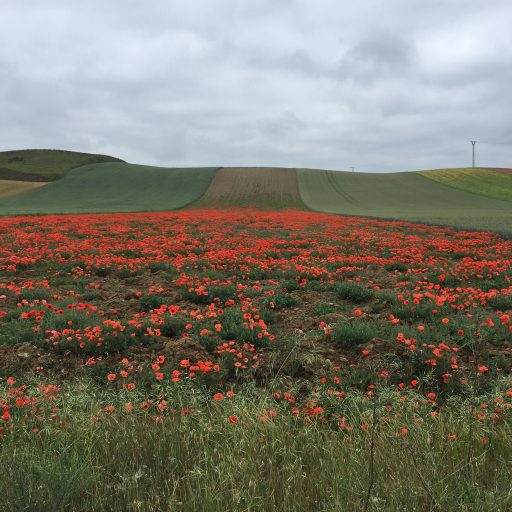
A field of red flowers and a cloudy sky
Camino de Santiago
  • Grateful May, Day 1

    Satya and Kaspa have started a new writing theme for the month of May–gratitude. Each day on their website, Writing Our Way Home, they share the small and big aspects of their lives for which they are grateful, and they invite others to do the same.

    I signed up for their inspirational emails to keep me going; I’ll admit, I tend to let my mind run along some very slippery, downward slopes.  Having a bright note in my inbox reminding me to look up at the blue sky encourages me to pay attention to what brings me joy and happiness.

    May 1: After a long drive in rush hour traffic and teaching a three-hour writing class at the community college, I came home to a sink full of dirty dishes, the counters littered with dishrags, coffee spills, and crumbs. The dogs were whining to be let out. I was feeling tired  from the work day and disappointed that no one in the house had cleaned up the kitchen mess.

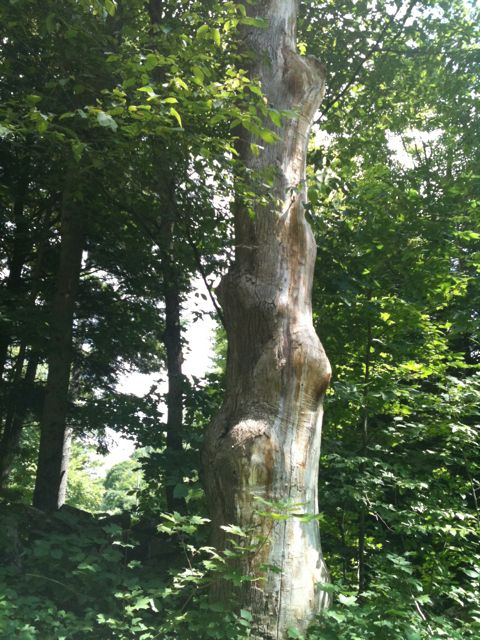
    But when I took the dogs out to the back yard, I looked up at the canopy of tulip poplars and hickory trees hovering over the house, shifting in the twilight breeze. I was still tired, still disappointed that I would have to go in and clean, but for that moment when I stopped at the fence and looked up, I felt the peace that comes with pausing and paying attention to what is good.

    Wordsworth writes in his poem Tintern Abbey,

                                        These beauteous forms,
    Through a long absence, have not been to me
    As is a landscape to a blind man’s eye:
    But oft, in lonely rooms, and ‘mid the din
    Of towns and cities, I have owed to them
    In hours of weariness, sensations sweet… .

    Just as the poet’s memories of nature help to restore him when he is alone in his rooms, even my small moment of looking into the veil of leaves at dusk helps smooth the rough edges of anxiety and sadness, emotions that have built up in me over the years.

    The trick is to pay attention, and to be grateful. I’m grateful for the sea of trees that sways in my backyard, for the birdsong that wakes me each morning in May.

    Tree


    May 4, 2014
    Grateful May, writing our way home

  • Notes from the Palm Beach Poetry Festival

    This past January I had the good fortune of attending a poetry workshop with Linda Gregg at the Palm Beach Poetry Festival in Delray Beach, Florida. 

    I was excited to attend a workshop with Linda Gregg; before it began, I had a kind of expectation that something magical would happen. Of course, the reality of an event usually does not meet our preconceived notions.

    “A good traveler has no fixed plans and is not intent upon arriving.” –Lao Tzu

    The magic has only recently begun to work in me, and it hasn’t been in the form of new poems. I have had to allow a bad cold and some low spirits to churn their way through my body and mind, but now, as I write these words, I’m beginning to feel like I can return to poetry and the magic I am experiencing in hindsight from Linda Gregg.

    In an effort to share everything, to refrain from hoarding, I am giving you these notes I took during the workshop with Linda Gregg and also from the craft talks, interviews, and readings I attended. I haven’t framed these notes with any kind of commentary or explanations. If I have made a mistake in conveying Ms. Gregg’s ideas, these mistakes are my own.

    ***

    Notes from Linda Gregg’s Workshop and the Palm Beach Poetry Festival

    Some of the concerns of Jack Gilbert’s poems: Serious, delight, dearness, God, nature, spirit, sacred. Most of what LG says about craft and aesthetics comes from Jack Gilbert.

    Some exercises:

    1. Read “Danse Russe” by William Carlos Williams in class and have the students answer the question “Is he happy?”
    2.  The building you’re in is on fire, and you won’t survive. You have fifteen minutes to write. You won’t survive, but somehow your writing will. Either give the time or act as if the person has only fifteen minutes. With this exercise you can’t be cute or funny. You have to take it seriously.
    3.  Cross-gender. Write a poem from the point of view of the opposite sex. Don’t use this poem as revenge. Imagine a situation and go deeply into it from the inside out.
    4.  “Thirteen Ways of Looking at a Blackbird.” It’s about thirteen ways the mind can see a single object. Every time you look at the thing you have to re-create what it is. LG gave the example of her art teacher telling her to paint the same lemons over and over, but every time she painted them she should re-invent what art is.
    5.  Archilocus: Look up some of the fragmentary poetry by Archilocus translated by Guy Davenport and finish the poems.
    6. Seeing six things. Make a list of six things that you see for a week. Then choose two and write a poem. See if the things have resonance. One might ask, why does it have resonance? Why does it matter? Think of Hopkins’ “God’s Grandeur.” You wake up to your life.  We need to care how the reader experiences the poem–J. Gilbert did. The poem intuits how the reader will believe. Like “Danse Russe,” we believe in the images of the poem. Read “The Art of Finding.” http://www.poets.org/viewmedia.php/prmMID/19260
    7. Write a poem as an animal. She read her poem “The copperhead.” It’s not a Disney cartoon. Inhabit the animal from the inside. As Jack Gilbert said, “Dig deeper. Go deeper.”
    8.  Write about a question you can’t possibly answer, like “What is the face of God?” Write a poem you can’t write. Take on the impossible.
    9.  Live with a tarot card with a week and then write a poem about it.
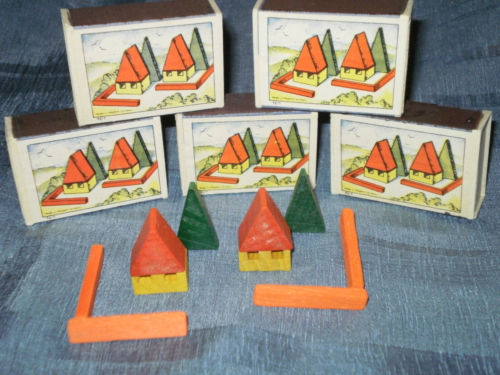
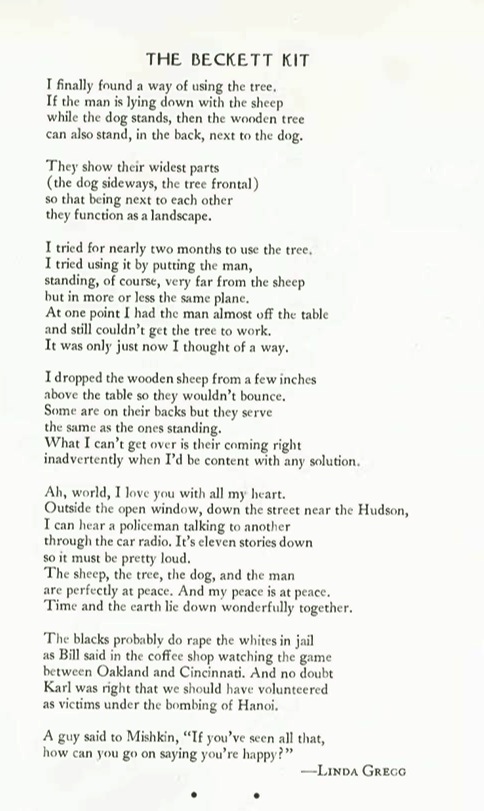
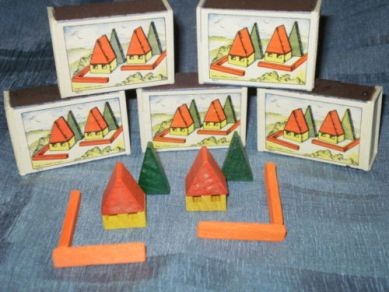
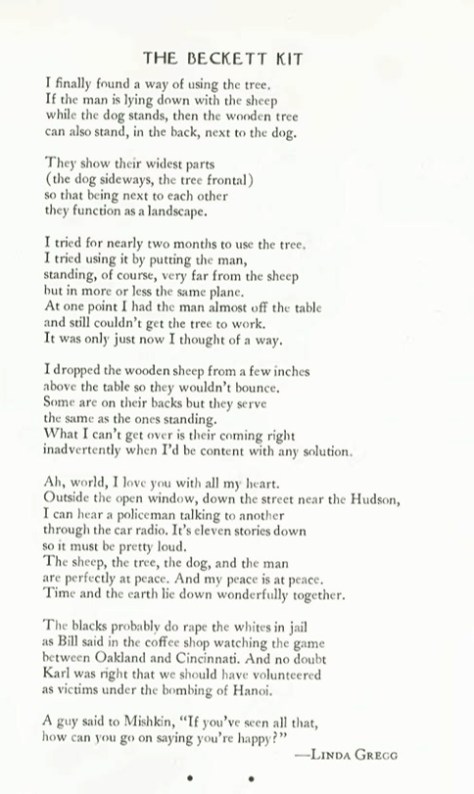
    10.  Find a scene like a German matchbook toy and then read her poem “The Beckett Kit.” In this poem the speaker describes placing the objects in the toy kit on a table. Then the poem turns on her observations of the things she has heard outside the window. Describe the toy and then make observations.
    Image

    Image

    ***

    Let the words mean what they mean, don’t turn them into plays on words. It gets to be too clever, distances the poem from what it wants to say. Stepping from stone to stone can be an adventure. Strategy can be fine, but use intuition also.  Try to stay in the poem, not talk about the poem. She suggested reading Keats’s last poem to Fanny Brawne as an example of staying in the poem.

    This Living Hand

    This living hand, now warm and capable

    Of earnest grasping, would, if it were cold

    And in the icy silence of the tomb,

    So haunt thy days and chill thy dreaming nights

    That thou wouldst wish thine own heart dry of blood

    So in my veins red life might stream again,

    And thou be conscience-calmed—see here it is—

    I hold it towards you.

    –John Keats

    Linda Gregg: “I sit down at night around 10:00 and ask the gods if they will help me with this. Or I walk up my father’s mountain if the poem doesn’t come. The brain doesn’t get to run the show, even though it’s there in the background.

    Dismount: this is where the poem discovers something, usually at the end. If the poem is good, it knows where and when to end.

    Read Selected DH Lawrence, edited by Kenneth Rex Reed. JG loved Lawrence and Thoreau. “The White Horse” by DH Lawrence. Lawrence didn’t revise his poems. He re-wrote them instead.

    The youth walks up to the white horse, to put its halter on

    and the horse looks at him in silence.

    They are so silent, they are in another world. –DH Lawrence

    LG comes to the page in a prayerful state. Looks for the shapeliness of things. She told a story of Ezra Pound, about a cloth, a magnet, and metal shavings. If you put a cloth over a magnet and then sprinkle metal shavings on the cloth, the shavings will come together in the form of a rose.

    The secret that no one knows about old people is that they are angry.

    You have to be willing to give up your darlings.

    Poems work on both horizontal and vertical planes. We have to be wiling to go deeper.

    After you’ve written the poem, the poem has rights. Pay attention to what the poem says to you.

    Keep the poem taut, like Ariadne’s thread.

    Be careful with similes. We can let the image speak for itself.

    LG is more intuitive, archetypal.  She gets the poem on the page all in one move. Jack Gilbert was more strategic. He would walk around all week with them poem in his head and then use strategy when he wrote it.

    The poem is not the dream. It’s the relationship between the poet and the dream. She told us a dream she had once of her mother. In the dream, LG is outside the room where her mother is, and she hears terrible screams. Either the mother is being attacked by a terrible beast, and LG needs to save her, or the mother has turned into a beast and if Gregg goes in the room the mother will tear her apart. Her poem “There She Is” came out of this dream.

    If there’s no magic in a poem it’s probably not a poem. Magic changes one thing into something else. Think of Wakan Tanka. Doing the impossible. Take on a large subject. The brain will start to stutter [the mind will get out of the way and the self will rise].

    “All the tired horses in the sun. How am I supposed to get any ridin’ done?” Bob Dylan song.

    Messages are not poems. The magic is in the oblique telling. It can’t be done mechanically.

    Writing is like a dreamcatcher: catching what is inside of you and putting it on the page. What does the poem want us to believe?

    LG: “ I write plain because I want my poetry to live as long as Sappho’s”

    Don’t make the reader do too much guesswork.

    She compares her poems to Michelangelo’s sculpture. He wanted to make sculptures that could roll down a flight of stairs and nothing would break off.

    What we need to do is find our poetry and just write it.

    A poem is a boat and it’s only supposed to carry what can fit in one boat. Use economy of language.

    Essays by Jack Gilbert, From 19 New American Poets of the Golden Gate: “Real Nouns” and “The Craft of the Invisible.”

    ***

    Notes from interview with Natasha Trethewey

    Turning hurt into poetry.

    “Calling”: I have to have a particular vision for what I want to write. Social Justice is important. Biblical verses that hold secular meaning.

    Let the seams show in the poem, leave the meta-poetic in the poem, the why I am writing the poem.

    Our quarrel with others is rhetoric. Our quarrel with ourselves is poetry–Yeats.

    It’s not just about what literally happened but what we make of it.

    To write is to re-create the truth, to establish it. What is true is the mind at this moment needing to make sense of the past. Mark Doty suggests that we begin to describe before making figurative sense of what we make of the description (she’s talking about her ekphrastic poems in Thrall).

    Going back to a past that never really existed at all.

    Flannery O’Connor: You can’t go home again because you have changed.

    Language in the service of social justice: Josephine Jacobson, Jeff Brown–poetry dealing with social issues.

    ***

    Notes from Tim Siebles’s craft talk:

    Nobody writes poetry so that no one will listen.

    Poetry and metaphor create the kind of life that pushes back the shadows of distraction. Poetry allows us to see magic in action. It wakes us up out of our stupor. 
    March 15, 2014
    Jack Gilbert, Linda Gregg, Palm Beach Poetry Festival, poetry

  • AWP Recap

    I’m one of the 10,000 plus who descended upon Seattle and the Washington State Convention Center for AWP, the Association of Writers and Writing Programs. And here I am back at home, thank God, but in bed with a terrible cold.

    The best part of going to Seattle was seeing my friends and getting to explore a new city with them. It’s ironic that the majority of folks I spoke to at the conference are writer friends who live in Atlanta, people I could see almost any time, except for two who now live in Colorado and Tennessee, respectively.

    Coming home with a cold has clouded my view of the whole event. What stands out about the conference are the rows of very similar tables and booths at the book fair, the very similar journals that publish very similar poems, the masses of writers churning up the four levels of escalators, lines for the the public bathrooms, and all those hands touching the railings. I must have touched the wrong railing.

    But wait. I AM letting the cold spoil my memories. There was the very pleasant experience of meeting the editor of Pilgrimage, a beautiful magazine from Colorado State. And then there was the sip of Wild Turkey at the excellent Birmingham Poetry Review table. District Lit represented, without the backup budget of a university to foot the bill, as did Sundog Lit.

    I had a nice chat with the managing editor of the New England Review, a fellow Middlebury alumna (I’m from the Language Schools, not quite as Midd as the four-year undergrads).

    And I got to meet for the second time the wonderful and talented Anya Silver, who signed my copy of her latest collection, I Watched You Disappear. More on this moving and powerful book in another post.

    Of the hundreds of panels and readings I only attended two, but they were both superb. One was a panel of poets whose work is included in the anthology of devotional poetry, Before the Door of God, which is now on my to-read list. Mary Szybist read a poem about her mother that had everyone weeping. I was looking forward to hearing her since I had recently read her book Incarnadine, winner of the 2013 National Book Award in poetry. She read like an angel, as if she were transmitting the voice of Mary herself.

    The other panel I attended was a moving tribute to poet, essayist, and literary entrepreneur Kurt Brown. His wife, poet Laure-Anne Bosselaar, read one of Kurt Brown’s final poems, a short lyric about his last kiss that he never gave her, that is still inside of him. We were all wiping our eyes.

    I was in Seattle only two and a half days, not even enough time to adjust to the time change between the Pacific Northwest and Atlanta. So I am grateful for the chance to have run around the city with my friends, to have seen Pike Place Market, and to get to know a few new journals. I don’t know if I will attend the conference next year, though. I might prefer a writers’ festival of no more than a few hundred. Maybe a retreat is more what I need.

    March 3, 2014
    AWP14, Literary Conferences, Seattle

  • Thoughts about Meditating and a Haiku

    Sitting on a bolster

    Eyes downcast, thoughts turned inward

    Ice reflects on walls

    When I meditated today, I thought about what I would write for this day’s mindfulness writing challenge. But I need to forget about writing when I sit to meditate.

    My imagination is another distraction I don’t need to add to my deck of wandering thought-cards.  Thinking about what I will write is delightful and entertaining, but I want to focus on the breath, on the happiness I feel having, for the length of one breath, nowhere to go, no one to talk to, nothing to do.

    Mindfulness Writing Challenge, Day 29, Writing Our Way Home. 

    Image

    January 29, 2014
    #mindfulness writing, small stones, writing our way home

  • Almost Midnight Haiku

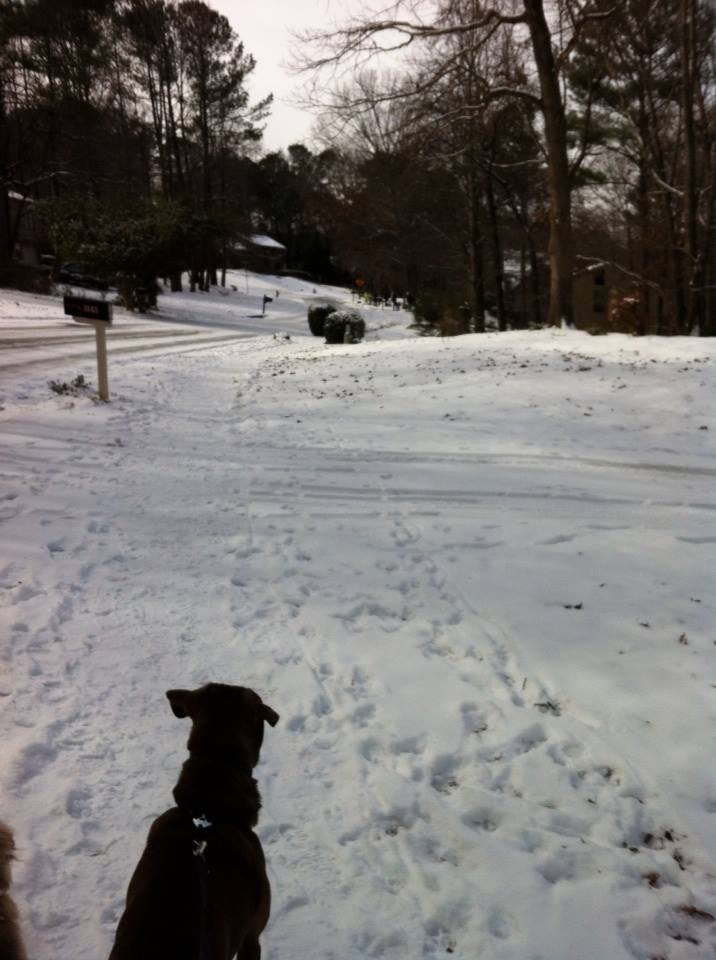
    First snow in Georgia
    Three crows land on a street light
    Children stranded in buses
    Mindfulness Writing Day 28, Writing Our Way Home

    January 28, 2014

  • End of the Day Haiku

    In the sink, broken glass

    We each pick up the pieces

    No one cuts a finger 


    Mindfulness Writing Day 27, Writing Our Way Home


    Today I read poet Jane Hirshfield’s The Heart of Haiku. In this wonderful essay, Hirshfield explains some of Basho’s life story, traces the history of haiku, and then offers translations and interpretations of some of Basho’s poignant and deeply mindful verse. A practicing Buddhist, Jane Hirshfield has insight that allows her to shed light on Basho’s poetry for those who are unfamiliar with Japanese culture and Eastern philosophy. 

    Another short article well worth the time is Aimee Nezhukumatathil’s “More than the Birds, Bees, and Trees: A Closer Look at Writing Haibun.” She emphasizes the importance of cultivating aware, “the quality of certain objects to evoke longing, sadness, or immediate sympathy.”

    Jane Hirshfield also mentions this important aspect of haiku and how it was Basho who encouraged his students “to feel sabi.” She goes on to explain that “to feel sabi is to feel keenly one’s own sharp and particular existence amid its own impermanence.” 

    Daily mindfulness writing and writing small stones are a beautiful way to feel sabi and to cultivate aware in poetry and in life. 

    January 27, 2014
    #mindfulness writing, small stones, writing our way home

  • January Light

    Red lies on his belly
    In a bar of light.
    Face to the wall
    Hind legs splayed,
    He abandons himself
    To the warmth.

    20140126-165405.jpg
    Day 26 Mindful Writing Challenge, Writing Our Way Home

    January 26, 2014
    #mindfulness writing, writing our way home

  • Indoor Swimming in January

    If you close your eyes and focus on the space between your eyebrows, a white light will appear. Sometimes the light will crystalize into a sphere lined with purple. Some longtime meditators who maintain focus will even see a white lotus lined with purple. I have only seen the sphere, sometimes called the pearl.

    Today swimming laps the sun spills into the pool through the glass wall. On the other side of the wall is a stand of very tall pine trees. Beyond the trees, a robin’s egg blue sky and a single cloud.

    I focus on the breath, sometimes kicking a little harder to increase the amount of air I need to take into my lungs. I don’t try to go too fast, just fast enough so that my mind stays focused on the sensations of swimming–my shadow swimming with me along the bottom of the pool, the shaft of light I swim through each time I reach the deep end, the axle of my shoulders as my arms arc up and down, scooping the water, driving the rest of my body forward through the water.

    There is no rush, just back and forth through the water from one side of the pool to the other, pushing gently with my feet  off the side  of the pool to propel myself back into the lane. Nowhere to get to, no goal other than to breathe, glide, and enjoy those moments at the far end when the sun shines on my face.

    Maybe it’s the memory of the sun that allows us to see the pearl in the mind space when our eyes are closed. Even when we’re in the dark the light exists.

    Mindfulness writing, Day 17, Writing Our Way Home.

    January 17, 2014
    #mindfulness writing, small stones, writing our way home

  • Meditation on Sounds

    Click-click, a metal zipper taps against the drier drum.

    Click-click, the house birds have come back to reclaim

    their timeshare above my window.

    A fledgling creature clicks and mewls from the upper branches of a tree

    outside my window.

    A crow creaks a greasy call across the street.

    The whoosh of tires on asphalt, wind parted by metal hulks.

    The cool swish of air on the in-breath, the warm puff on the out-breath.

    Drawing air up to clavicles, I hear the click-click

    of spines expanding along my upper back.

    A thin click as lips part then close.

    The muffled click of a wooden bead as a mala passes through my fingers.

    ***

    Many beginning meditations instruct practitioners to listen to the sounds that come and go outside the room where they are sitting. We notice the sounds rise and fall away, without labeling them or trying to find out what is making the noise.

    We then focus our awareness on sounds in the room where we are sitting. The point is to notice how sounds come and go, just like feelings and thoughts come and go. In between the sounds, feelings, and thoughts, we continuously draw the mind back to the breath.

    I found that today I kept labeling the sounds. I knew I was going to spend time writing after I meditated, and so my mind kept sifting through the sounds and placing words on them.

    But when I think back to all these tiny moments of small noises, I remember a gentle popping, clicking, humming– these are the continuous sounds of life. They are always there, rising and falling like waves in an ocean. We swim in a broth of sound waves.

    Day 13: Mindfulness Writing, Writing Our Way Home.

    January 13, 2014
    #mindfulness writing, small stones, writing our way home

  • Thoughts While Meditating Under a Light Therapy Lamp

    Imagine our first home, a time when we knew no fear.

    Close your eyes and turn your face to the sun–this was our first light.

    Hold the webs of your fingers above a flashlight– that red glow was our world.

    The plush warmth of a giant membrane, a kind of palace.

    Between systolic and diastolic

    Between rising and falling, a gentle rise, a gentle fall, a fluid absorber of shock

    Between in-breath and out,

    We lived in a symphonic buzz of warmth.

    When we left this palace, our tender flesh bumped against cold plastic and table edges.

    We couldn’t see above countertops where the palace guards chopped carrots and onions

    for our broth.

    We swam in the flux between fear of death in this cold, sharp place

    And a desire to please the palace guards, the ones who had control over our survival.

    The guards had forgotten they too once lived under the protection of the symphonic membrane.

    All they remembered was their desire to survive.

    Day 12, January Mindful Writing Challenge.

    January 12, 2014
    #mindfulness writing, small stones, writing our way home

Previous Page Next Page

Blog at WordPress.com.


Loading Comments...
 

    • Subscribe Subscribed
      • Balanced On the Edge
      • Join 241 other subscribers
      • Already have a WordPress.com account? Log in now.
      • Balanced On the Edge
      • Subscribe Subscribed
      • Sign up
      • Log in
      • Report this content
      • View site in Reader
      • Manage subscriptions
      • Collapse this bar