Balanced On the Edge

    • About Balanced on the Edge
    • Publications
    • Swimming This

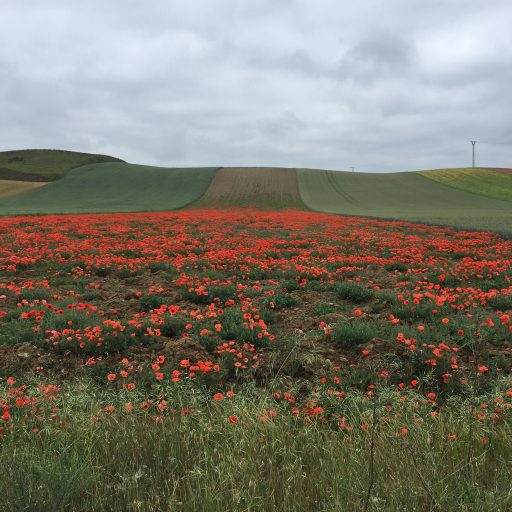
A field of red flowers and a cloudy sky
Camino de Santiago
  • Listicle

    The one thing you should never say to someone with OCD

    Three easy styles when you don’t have time to blow-dry

    Four pieces of priceless advice from the cast of “Orange is the New Black”

    Four possible futures for Earth if global warming keeps up

    Five things super successful people do before eight AM.

    Five things you need to know about NYC’s next possible first lady

    Five foods you should never eat again if you’re trying to lose weight

    My five golden rules for being a writer on Twitter

    Six things your hairstylist wishes she could tell you

    Become the CEO of your own brain in six easy steps

    Here are seven dog beds your furry friend is going to love

    Seven breathtaking sunsets from around the world

    Seven reasons To never drink bottled water again

    Eight items that will completely transform your wardrobe

    Nine questions answered: Impact of government shutdown on travelers

    Ten things all singles should celebrate

    Ten celebs we never knew would go from child stars to sex symbols!

    Ten celebrities who are difficult to work with

    Ten gorgeous, energy-efficient homes you’d actually want to live in

    Ten past Republicans who’d never make it in today’s GOP

    Eleven drinks that are destroying your health

    Eleven lessons every woman can learn from Disney princesses

    The eleven best universities in the world

    Twelve celebrities who say they don’t want children

    Thirteen “Fresh Prince of Bel Air” dance moves

    Fifteen African American art world game changers

    Fifteen perfectly awful ad placements

    Fifteen reasons why the world looks better in black and white

    Fifteen amazing facts that you didn’t know about unicorns

    Seventeen pics that show how much time has changed

    Seventeen bizarre sex facts you probably didn’t know

    Nineteen things you wish weren’t true but are

    Twenty things all women should do before getting married

    Twenty-one golden rules from one wise grandmother

    Twenty-five best art exhibits to see this fall

    Twenty-five pics that will make you say “AWWWWWW”!

    WATCH: the fascinating origins of forty-two idioms explained

    David Bowie’s seventy-five must-read books

    ***

    This is a found poem I wrote by collecting listicles over the last week or so. I limited myself to listcles that appeared in my Facebook or Twitter feeds. I did not read any of the articles. The only changes to the text that I made were making the capital letters of a headline lower case and writing out all numbers. I stopped collecting the headlines when I reached the footer of my word processing program.
    I was tempted to add this last listicle I just found when I looked up the wiki link to “listicle,” but it would have meant breaking my rules for the poem, so I give it to you here: “Eleven reasons why we should still love listicles.”
    October 3, 2013
    facebook, listicle, twitter

  • Late Summer Reading

    In book four of The Chronicles of Narnia, Prince Caspian, while the boys are skinning a slain bear for its meat, Lucy says to Susan,

    Wouldn’t it be dreadful if some day in our own world, at home, men started going wild inside, like the animals here, and still looked like men, so that you’d never know which were which?

    Susan doesn’t respond to Lucy’s fears, saying instead that they have too much to worry about right now in Narnia.

    The dwarf has just killed a grey bear with an arrow after it tried to attack them; Susan hesitated to release her arrow because she thought it might be one of the talking bears she used to know when she was queen in Narnia.

    It is a tricky line of reasoning for CS Lewis, since in the books the talking animals do eat fish and bacon, and in general behave as people did in mid-century England. They avoid killing whenever possible except in self defense. It seems like fish don’t count, only mammals, and bacon apparently is in its own food group!

    The idea is that if a creature has the ability to reason, it should be treated with compassion. And even if it can’t reason but is not attacking, we should be gentle and kind with it.

    Of course, if an animal were going to attack, we would defend ourselves. Humans are animals too. And unfortunately, some humans seem to have lost the ability to control their anger or fear and, armed with guns, they attack.

    Sometimes society can be like Lucy’s fears, that we can’t tell the evolved humans from the ones who have lost a good part of their hearts. Who hasn’t met up with people who lie and manipulate for their own, hidden agendas?

    The trick is to meditate, to stay true to our hearts, to be outdoors and in nature, to keep a clear mind and not fall into the dream of “getting and spending” and “laying waste our powers,” as Wordsworth put it so well almost two hundred years ago.

    20130825-120101.jpg

    August 25, 2013
    quotes

  • Lines from Keats’s Lamia

    “It was no dream; or say a dream it was,
    Real are the dreams of Gods, and smoothly pass
    Their pleasures in a long immortal dream.”

    Three lines from Lamia, by John Keats, July-August, 1819.

    After I read this passage I decided to copy it down. I need to let the thoughts about the gods’ dreams settle in me for a few days. Maybe it’s just another reason to wish I were immortal. But maybe I can be a god if I dream the right dream.

    The speaker is describing a scene in which the beautiful, sad serpent Lamia has lifted the cloak of invisibility from a nymph who has beguiled the god Hermes. Now Hermes can see his love, and she is not a dream.

    20130530-222851.jpg
    Painting of a lamia by John William Waterhouse, c. 1900.

    May 30, 2013
    dreams, myth, poetry

  • Banana Muffins

    Tomorrow a double batch of banana muffins will bake themselves into existence. And then they will be devoured. And they will never know what they have been or where they have gone. Poor little muffins.

    20130517-213338.jpg

    May 17, 2013
    baking, bananas, free time, Muffins, yum

  • Sudden Transformation

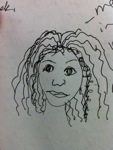
    Dream: I look in the mirror and realize I have turned into a young Black woman. I have beautiful dreadlocks that sweep away from my face and fall over my shoulders. My eyes are big and wide, and my mouth is full. I’m surprised and pleased at this sudden transformation, but there is also the recognition that this woman has been inside me all along.

    Before I had time to recall my dreams in the morning, I picked out a few poetry collections to bring on our road trip to Chicago–Nikky Finney’s Head off and Split was one. While reading the first piece in the book, “Resurrection of the Errand Girl: an Introduction,” I remembered my dream.

    It’s an inspirational book. It looks like my car ride to Chicago will be a good one.

    20130511-125432.jpg

    20130511-125919.jpg

    May 11, 2013
    dreams, poetry

  • Metaphysical

    Last night’s dream: I am taking a poetry exam and have the option of choosing my own essay question. I’m excited to write about the influence metaphysical poets had on T.S. Eliot.

    In actuality, this was a question on my recent M.F.A. exams that I chose not to answer, because I didn’t know much about the link between Eliot and the metaphysicals. I have a vague memory that he might have been related to George Herbert. I just found Eliot’s essay on the subject in a collection of John Donne’s work, and I’m planning on reading it.

    I think the answer would involve a close reading of Ash Wednesday and The Four Quartets. So that’s next.

    20130508-121036.jpg

    May 8, 2013
    T.S. Eliot

  • Poems in Flycatcher

    Many thanks to poet and editor Christopher Martin for including two of my poems in the latest issue of Flycatcher .

    According to their mission statement, “Flycatcher strives to explore what it means—or what it might mean—to be native to this earth and its particular places. ”        

    Both of my poems are set in the South.

    • Learning to Pray in Spanish takes place along the Chattahoochee River in suburban Atlanta.
    • Folly Beach, a seaside town near Charleston, SC, is a meditation about being on the beach on a sunny, beautiful day yet still not at peace.

    This issue is full of lovely poems and is well worth reading. Several of my poetry friends have work included:

    • Save One  and These Fatals   by Cheryl Stiles,
    • Because the Guy in the Red Pickup Ran Over the Goose on Purpose  and Park by Tania Rochelle,
    • These Clothes Smell Like Smoke by Rupert Fike.
    • Stoneroller in the Hiawassee by Christopher Martin.


    February 6, 2013
    Flycatcher, poetry

  • Found Poem

    words from my diary, 11/11/1981

    The pupils of my eyes
    are very small,
    as if the dark spots
    were nostrils.
    When I look at them
    in the mirror, I feel
    cold and ugly.
    I float in and around
    whatever is bothering
    me without knowing
    what it is.

    Process

    The above passage is taken directly from my diary, which I wrote on 11/11/81, 6:30 pm, in Athens, Georgia. Like many twenty-one year olds, I turned to my journal whenever I was feeling blue. I took the passage and shortened the phrases, turning it into a poem of sorts. I liked the image of pupils like nostrils.

    Most of the diary entries from that year are about my relationship with my boyfriend. Here’s a quote referring to him.

    I lie. I don’t love. I am not kind to people. Conrad was right in his idea that people are dark and savage in their hearts. My heart feels like lead in my chest. Do I dramatize these feelings? Maybe I’m feeling sorry for myself because I’m not making any progress with developing my thoughts and finding an art. The thought of being an artist has been in my mind for a long time, but now I know I’ll never be one because my personality is two-dimensional, as Stephan would call it.

    Stephan is what I’m calling my boyfriend at the time. I don’t want to say his real name, because he comes off here as being very critical of me. In truth he was a fun-loving, creative person. I was suffering from depression during our time together but didn’t realize it. He was very patient with me, for the most part, as patient as any twenty-three year old guy could be. I cried a lot and was moody, and, like I wrote in the found poem, I had no idea why I was so sad. I’d start fights with him just to have something to blame my feelings on. I’m glad I finally broke that pattern. It only took me thirty years!

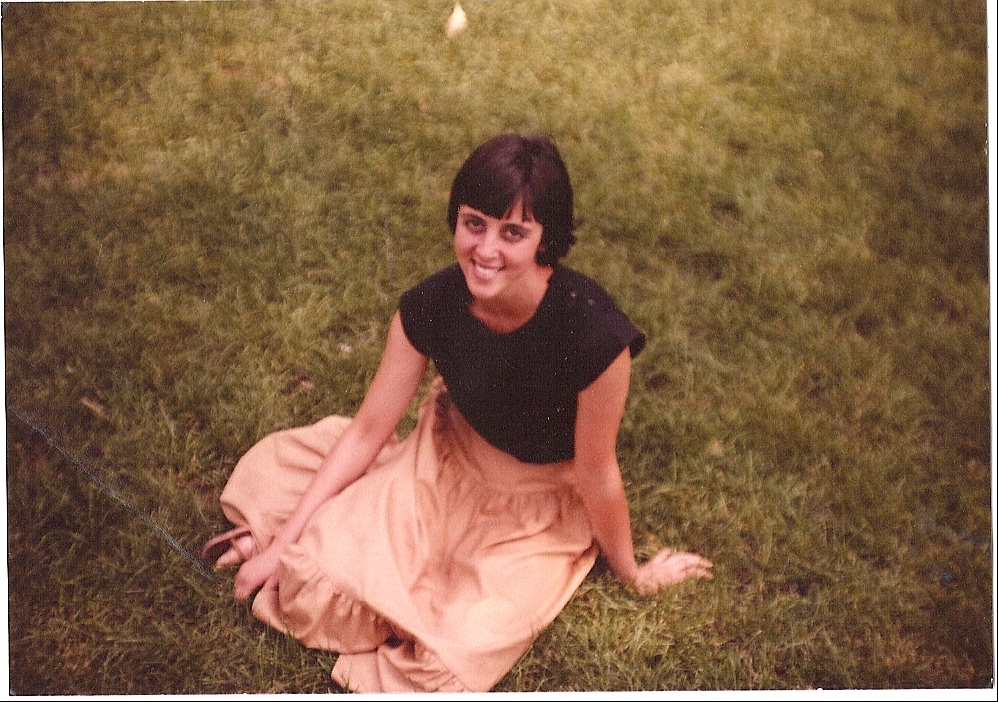
    Athens, 1983

    I remember when we took these pictures. We were walking around Athens, looking for interesting shots, but also saying goodbye. We would both be leaving soon, Stephan for Stockholm, and I for Madrid. I still love Athens, and remember my time there as magical. I think anyone who lived there during the late seventies and early eighties feels the same way.

    me, 1981, in Central Park

    A group of us drove from Athens to NYC in one weekend to hear the Side Effects play at the Peppermint Lounge. Or it could have been CeeBee GeeBee’s. I went to both of those clubs to hear bands from Athens.

    November 2, 2012

  • To Make a Dadaist Poem

    My First Dadaist Poem

    after Tristan Tzara

    EVER “Bridesmaids.”

    JOKES doing Mastodon year.

    People

    Specifically the BEST terribly

    I biggest laugh ever them: the shop where OK! not go shit

    I dress

    The love things it because this haven’t got wrong

    sink

    You can watch a video presentation of “To Make a Dadaist Poem”  at Moving Poems, curated by Dave Bonta.

    Modern and Contemporary Poetry (ModPo) with Al Filreis via UPenn and Coursera has been a bright spot in my poetic life.  Most of the modern American poets I’ve read branch off from Walt Whitman  to Robert Frost and later into the narrative and confessional mode, such as Theodore Roethke, Sylvia Plath, and Anne Sexton.

    My own work follows this narrative aesthetic, to an extent.  But it’s important to takes risks in order to find the language that best expresses this experience of life that arises each day.

    This free, online course has helped me understand the desire to break apart conventional modes of expression. As Al Filreis explains in his video talk about dadaist poet Tristan Tzara, to write a poem based on a somewhat random selection of words allows the writer to transcend ego.

    My grasp of this thought process is that writing about one’s feelings in a romantic, expressive manner reinforces codified ways of thinking. The idea is to use chance in the process of creation in order to reach the self that transcends conditioned responses to life. It relates to the imagist manifesto ” to make it new.”

    I’ve used a certain amount of random words in my poetry, such as computer-generated words I insert or work into a poem, but this time I adhered to Tristan’s Tzara’s instructions in his poem “To Make a Dadaist Poem.” 

    What you see here is a faithful copy of all the words from a magazine article that I cut up, put into a bag, and then chose one by one.  The only punctuation marks I use come from the cut up words. I enjambed only when the next word was a capital letter or if when I was copying I ran out of room on the page. While I don’t consider this experiment to have produced a work of art, involving myself in the dadaist process broadened my poetic toolbox.


    October 12, 2012
    Coursera, Dada, ModPo, Tristan Tzara, UPenn

  • Poetry of Epiphany

    Call it luck or synchronicity, either way I was happy to have run into Dan Veach at the Decatur Book Festival, because I returned home with a signed copy of his collection of poetry, Elephant Water.

    Veach chronicles Elephant Water’s genesis within the structure of the book. He introduces each section with a biographical note about where he was when the poems were written, and at the back of the book he has a geographical list for easy reference.

    Place plays a strong part in how these poems unfold, because the energy of the people, the land, the flora, and the fauna of each location inform the poems. Jane Hirschfield writes about Elephant Water, “The joy of these pages is a rare note in American poetry. Awareness infuses every page, as does close observation.” These poems are intimate with the spiritual pulse of life.

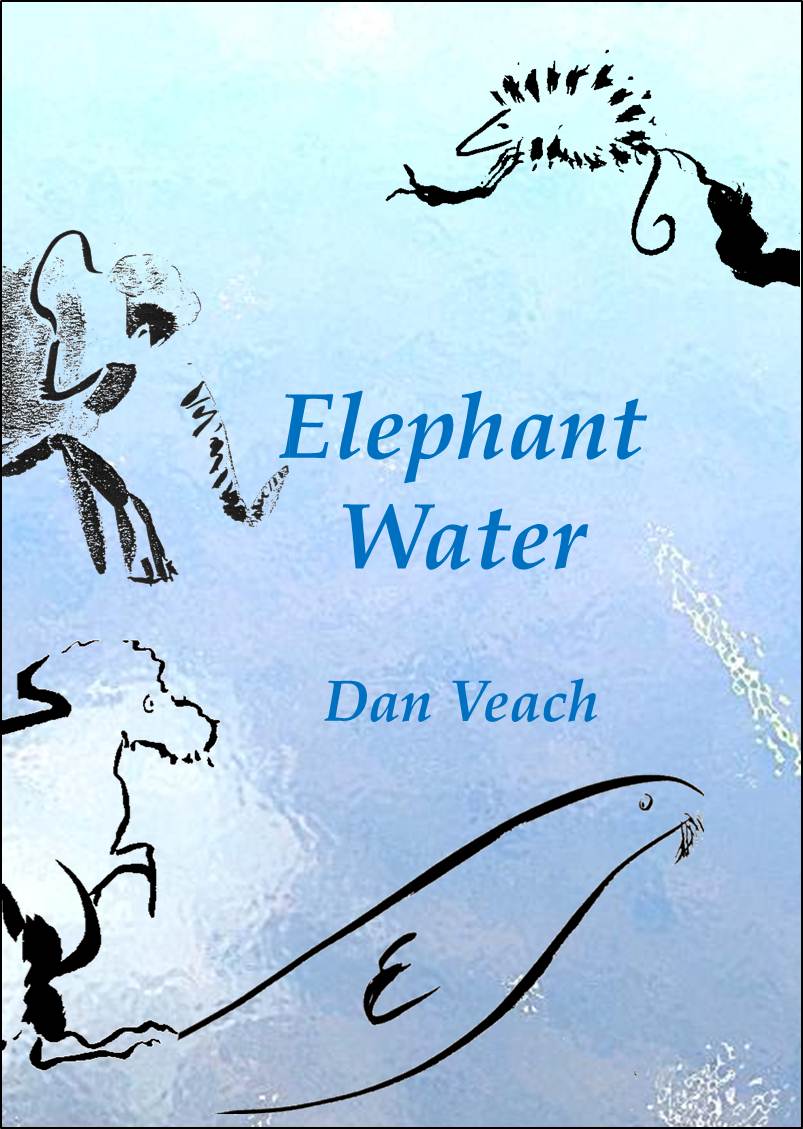
    Chinese poetry and ink drawings have also added their touch to Veach’s palette. Each page includes one or more of Veach’s whimsical, delicate line drawings done in the Chinese style. Elephants, seals, moths, fish, birds, and dogs are not only the subjects of some of the poems, but they also lilt across the pages alongside the text in the form of drawings. The book cover, Veach’s own design, blends sky blues to watery indigos, providing an ethereal backdrop for his animalia.

    It is rare pleasure to hold and read a book of poems for adult readers that includes original artwork by the author. Although Veach’s drawings come out of a time-honored tradition, it is one that has been somewhat neglected in recent times, at least in American verse.

    William Blake is known primarily as a poet, but those who love his poetry also revel in his transcendental paintings and drawings. English poet Smith worked by drawing, and often the poems came out of the images that appeared first. And Richard Wilbur made line drawings to accompany his light verse. It is gratifying to see Veach continuing this poetic collaboration with visual art.

    Another influence on Elephant Water is Veach’s love of music. He is a clarinetist, and I have heard him perform by reciting his poetry and playing the clarinet, a real treat. His love of music is evident in both the themes of some of the pieces and the attention he gives to the verse, with unobtrusive rhymes appearing here and there, a feathery, song-like punctuation.

    The poet invites us to read the poems aloud. In his introductory lyric essay Veach writes, “For this is poetry with body as well as mind, poetry that invites you, like “My Long Thigh Bone,” to dance.

    Elephant Water is published by Finishing Line Press, and can be purchased directly from the author at his website. Dan includes sample poems on the site for you to enjoy. You can also buy the book on Amazon.

    If you’re in Atlanta October 8, you can hear Dan Veach recite his poems at Callenwolde Fine Arts Center.

    Elephant Water, Book Cover Art by Dan Veach
    September 3, 2012
    art, Dan Veach, Elephant Water, poetry

Previous Page Next Page

Blog at WordPress.com.


Loading Comments...
 

    • Subscribe Subscribed
      • Balanced On the Edge
      • Join 241 other subscribers
      • Already have a WordPress.com account? Log in now.
      • Balanced On the Edge
      • Subscribe Subscribed
      • Sign up
      • Log in
      • Report this content
      • View site in Reader
      • Manage subscriptions
      • Collapse this bar