Balanced On the Edge

    • About Balanced on the Edge
    • Publications
    • Swimming This

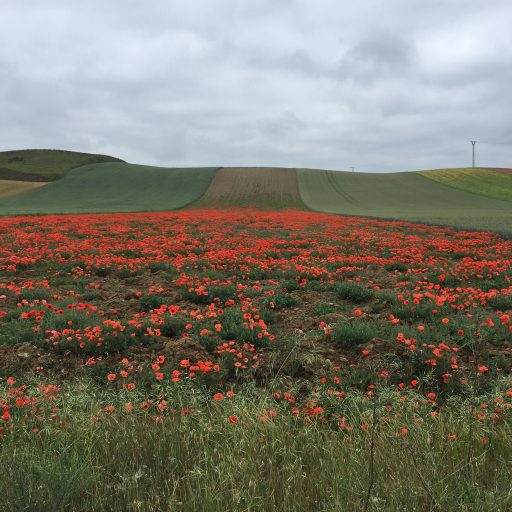
A field of red flowers and a cloudy sky
Camino de Santiago
  • Walks in Beauty

    My friend, whose name on this blog is Walks in Beauty, is a poet.

    Now in the process of gathering four years of poems to create a collection, she sometimes finds herself paralyzed with doubt about her ability to write publishable poems, even though she has met with extraordinary publishing success during these recent years.

    Writing to publish is arduous, especially for a young poet with rare originality and verve like Walks in Beauty.

    Desire for material success and our hope to be recognized for our unique talents often collides with the creative process.

    Time is not on our side–we need to take courses, write papers, take comprehensive exams, publish, lengthen our CVs, receive fellowships, and teach in order to entertain the idea of finding a teaching position after the four to six years of graduate work are completed.

    How can Walks in Beauty balance the timeless, spiritual act of creating with the more craven demands of the material world? How can any of us?

    I’m quoting a passage from the Dalai Lama’s Essence of the Heart Sutra to encourage Walks in Beauty, myself, and anyone else who finds herself walking life’s tightrope.

    Since happiness cannot be achieved through material conditions alone, we need other means by which we can achieve our aspirations. All the world religions offer means for fulfilling these aspirations, but I believe that such means can be developed independent of any religion or any belief. What is required is recognizing the immense potential we have as human beings and learning to utilize it. In fact, today, even in modern science, there is a growing recognition of the relationship between the body and the mind and an emerging understanding of how our mental attitudes impact our physical health and well-being. (6)

    I’ve had an abiding interest in Hatha yoga for decades, but until this summer, as I’ve had the opportunity to spend time with my two awakening, young adult sons, I merely dabbled in yoga as a sort of New Age feel-good technique.

    I found the Dalai Lama’s writings on the Heart Sutra among my son’s books. Philosopher read it first, and then Freeboarder picked it up. And I can tell from their actions they are living the words.

    They have inspired me to really examine my thoughts, words, and actions, and what I have found is not always so good. I have hung my sense of self on a New Age, misty skeleton, creating a kind of Madam Trelawney character (Harry Potter reference for those of you uninitiated souls) who spins yarns about dreams and blurts out ridiculous non-sequiturs, a lovable yet silly woman.

    I’m not sure yet about the meaning of these recent spiritual discoveries and how they relate to the creative process.

    What comes to me today, right now, is that creativity is universal, sacred, and at times ritualized. Since this is my belief for now, it follows that the job market, publishing, and all the rest of our concerns and worries should take a back seat to the act of creation. We need to find what we really mean, what we truly want to express.
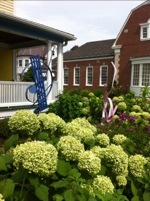
    20120818-111555.jpg

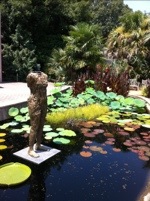
    20120818-111619.jpg

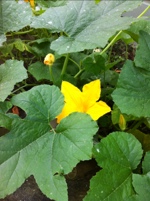
    20120818-111642.jpg

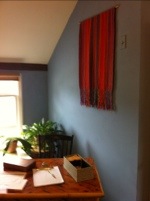
    20120818-111704.jpg

    August 18, 2012
    Essence of the Heart Sutra, The Dalai Lama, The Meaning of Life

  • My Beloved Child

    Tara Brach, in her book Radical Acceptance, quotes the following prayer by Indian sage Swami Kripalu, who is also known as the Beloved Bapuji.

    Leslie, the Tuesday morning yoga instructor at Yoga Great Barrington, read the prayer to us at the end of class when we were in savasana, and it brought tears to my eyes, not for myself exactly, but for all the young people getting ready to start their new school year.

    My beloved child,
    Break your heart no longer
    Each time you judge yourself
    you break your own heart
    You stop feeding on the love which is
    The wellspring of your own vitality
    The time has come,
    Your time
    To live, to celebrate, to see
    The goodness that you are…
    Let no one,
    No thing or ideal or idea obstruct you
    If one comes, even in the name of “Truth,”
    Forgive it for its unknowing
    Do not fight
    Let go
    And breathe into
    The goodness that you are.

    20120815-162623.jpg
    20120815-162741.jpg
    20120815-162839.jpg
    August 15, 2012
    Babaji, Indian sages, Prayer

  • Tears Ran like Animals

    “Tears ran like animals” comes from a line in Henri Cole’s collection Touch. The metaphor works well to describe the effect this collection has made on me.

    I am filled with up with the suffering expressed through the words. And lines like this one only make the loss and pain more penetrating:

    “We only have a little time, darling. Let’s read
    swim, and sleep in each other’s arms.”

    Cole begins with poems about the life, illness and death of his mother, but he also explores, as if in solitary thought, suicide, sexuality, failure, family expectations, war, and capital punishment, not in the abstract, but rather through the observation of specific lives, events, and nature.

    Most of the poems are blank verse sonnets that flow as if the reader had gained access to the thoughts of a passerby. Meditative, touching, Cole reveals the secret histories that drive our lives.

    20120717-112725.jpg

    July 17, 2012
    Henri Cole, poetry

  • Visual Shouting

    Most 21st-century Internet users know that writing in all caps implies a manner of visual shouting–we learned this e-etiquette rule back in the last century.

    I’ve noticed a return to block letters in some hipsters’ status updates on Facebook, and because of the silly nature of their observations on mundane life, I assume this trend indicates irony and therefore elevates said hipsters’ intelligence among like-minded peers. And I will admit, sometimes the all-caps updates are amusing.

    But what I’m thinking about now is how tv commercials are changing their tactics as a result of TiVo and U-verse.

    This morning I turned on CNN to catch up on the news, but after three minutes of listening to a debate over the issue of a voter having to present a government-issued ID in order to vote, the network took a commercial break, and so I paused the stream.

    20120710-104213.jpg

    The image above, F-L-Y, stayed on the screen while I went to the kitchen to put the kettle on and let the dogs in from their morning romp in the yard.

    FLY stayed on the flat, wide, 3-D, plasma screen while I spooned up my granola, sipped my coffee, and glanced at the piles of books on the table.

    Usually, when I pause the tv I lose interest in any further information CNN might offer, and eventually I turn off the set and continue my day.

    But lately, images that remain frozen on the screen have piqued my interest in ways the advertisers may or may not have considered.

    In the case of FLY, I thought perhaps the designers took into account how they now need to shout at the consumers, since many of us now have the capability of fast forwarding through the commercials. The hope is that some subliminal desire will remain with the viewer and therefore be associated with their product in the future.

    If I am at all aware of the product FLY is promoting, I can’t retrieve the thought in my conscious mind.

    Another option I have is to believe in the synchronous properties of the universe, and how thoughts converge in place and time in meaningful ways. I can assign the meaning I choose, even if the advertisers had no conscious intention of communicating whatever significance I give the image.

    In this way, I have created something new with the tv screen. I have turned the screen into a temporary holding place for art. Even the size and shape of the screen implies the shape of a medium-sized painting.

    The art is made when, as if by accident, the image on the screen becomes something I single out and to which I assign aesthetic or social value, kind of like Duchamp’s Readymades, like the toilet bowl titled “Fountain” or his snow shovel, titled “Shovel.” Duchamp painted the title on the shovel and also signed it with his artist’s signature. When commenting on this artwork, his first readymade, Duchamp said writing the title on the shovel added “verbal color.”

    My piece is titled SHOUT.

    July 10, 2012
    Graphics, media, TV

  • Tarot Poems

    The editors of Medulla Review just released their latest issue of poetry, stories and art inspired by the Major Arcana. The artwork is by the editor, Jennifer Hollie Bowles, who gives a statement about the process of creating this ambitious journal in an open letter, found here.

    She explains in her letter that although she is not a trained artist, she did not receive enough art to have an image for each of the cards, and therefore she decided to produce images herself that would reach into the psychic places the tarot is known to trigger.

    Here’s a direct link to my poem, “High Priestess.” I wrote this poem for the prompt during a week when a few of my poetry buddies and I were completing an 8-day poetry writing challenge.

    Once our writing spree came to an end, I revised “High Priestess” and sent it off. If not for the 8-day challenge, I doubt I would have had the discipline to write to the Tarot prompt in time for the submissions deadline, so I’m grateful my friends inspired me to write.

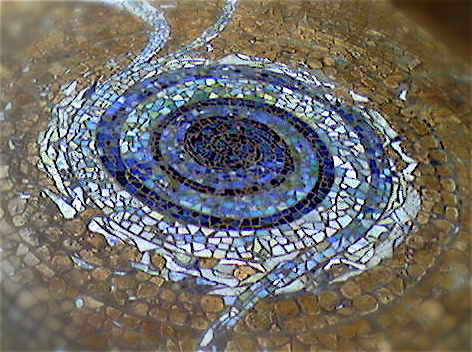
    Mosaic at The Crossings in Austin, Texas. I took this photo while at a writing retreat there with Amherst Writers and Artists.

    July 3, 2012
    Major Arcana, Medulla Review, poetry, Tarot

  • Poetry as Survival

    In an interview with Terry Kennedy at Story South,
    poet Christine Garren states that

    most poets, whether they catch a publishing break or not, are writing because they must–because the poem’s creation answers an emotional or spiritual need that they associate with survival

    These words speak to me, not only because they give me courage to continue writing, but also because they aptly express the kind of poetry I most love to read: poetry that must be written.

    This sense of urgency or need is an ideal, of course. Some poems end up being exercises. Lately I’ve been writing formal sonnets, and I’m not at all sure anyone will want to publish them. But I write them because I feel drawn to this almost 700-year-old form. Writing in form, or attempting to, is my way of connecting to those who have gone before me. Why not follow Shakespeare’s steps for a time, even if my boots are clunky compared to his handmade calfskin slippers?

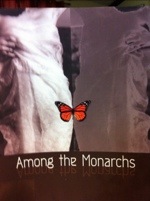
    After reading Christine Garren’s collection Among the Monarchs, it is apparent that she has created her own, organic form that has grown from the stirrings of her lyric mind.

    The speaker tells nothing, but rather implies moods, scenarios, and events as though we were listening to her thoughts and memories as they occur to her while she is sitting in a field, her back against an apple tree.

    There is implied abuse, rape, abortion, break ups, illness, death, but nothing is pinned down in exact narratives. We are not voyeurs of suffering as we read these poems–we are companions or even a part of the speaker’s own psyche. Reading this collection enveloped me in a world that required me to sit in a room by myself and re-read. I felt compelled to enter and re-enter this tender, imaginative mind.

    In the Story South interview Garren goes on to say, “When I care less about what an audience may think, I am able, it seems, to write a stronger poem.”

    Part of what lends the poems in Among the Monarchs their lightness and airiness is the form in which they are written. Many of the poems consist of a mere eight or nine lines, but the lines are long, many containing eight or more beats per line, as well as sentence fragments and more than one sentence in a single line.

    These strategies work in the poems’ favor. Garren’s unique, free verse style displays her gifts as a writer–she has her finger on the pulse of inner rhythms. She is listening to the poem that must be written, not the poem she thinks someone else wants her to write.

    And therein lies the mean trick of being in a formal writing program. As a student, I need to remember that learning from my teachers and studying the old masters will help me hone my craft, but in the end, if I want to write in my own voice, I need to lie in a field, or at least pretend to, and let the imagery float past me, reaching up a hand from time to time and brushing the thoughts across the page.

    In the meantime, I am going to hole up in an air conditioned room and dive again into Among the Monarchs. With triple digit high temperatures in Atlanta, it’s too hot to lie in a field.

    20120701-144211.jpg

    July 1, 2012
    Among the Monarchs, Christine Garren, poetry

  • Things That Are Silent

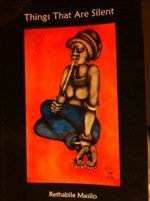
    Things That Are Silent, Rethabile Masilo’s first full-length poetry collection, is published by Pindrop Press in the UK. The result is a stunning work of art edited by poet and publisher Jo Hemmant

    Voted poet laureate of the Internet, Masilo is a poet, writer, and human rights advocate well known to those of us who have ventured into the world of online poetry.

    Though I found Masilo’s work via a virtual community, there is nothing virtual or second hand about the way he communicates in verse.

    Rethabile Masilo connects directly and honestly with the reader through poems that stand on the courage of their own convictions.

    The book begins with “Letter to Country,” a love song to the speaker’s homeland of Lesotho.

    Lesotho is a mountainous land that is surrounded, as if it were an island, by South Africa. In his introduction, Masilo remembers his many family members who were killed during the political troubles in Lesotho.

    These are poems with a social conscience, not only for the grief over the loss of the speaker’s father, but also for others throughout history who have endured oppression and brutality.

    In spite of the suffering the speaker witnesses, the poems also express the joy of life, the beauty of the seasons, the mountains, sensuality, and physical love.

    The lines are musical, written with precision, care, and tenderness, displaying a deep sense of awareness of lyric language. As a US speaker of English, I enjoyed reading a smattering of African expressions, such as “bakkies” and the board game shax.

    The bright red and blue cover art is by Lesotho artist Meshu Mokitimi, whose biographical notes are provided at the end of the collection. Mokitimi describes his style as being influenced by African Expressionists. The vibrant, strong lines of a woman sitting as if in contemplation sets the stage for these strong, contemplative poems.

    These poems exist, not because they wanted to be, but because they had to be.

    Rethabile (“Ret” to those who know him) writes about Africa-inspired literature at his blog, Poefrika

    His book can be purchased directly from the publisher, Pindrop Press,

    at Amazon,

    or Barnes and Noble.

    20120630-003115.jpg

    June 30, 2012
    Jo Hemmant, Pindrop Press, poetry, Rethabile Masilo

  • What Say You In June, Teachers?

    From a letter Sylvia Plath wrote to her brother:

    and I am to sacrifice my energy, writing and versatile intellectual life for grubbing over 66 Hawthorne papers a week and trying to be articulate in front of a rough class of spoiled bitches…

    (qtd in Stevenson).

    Any artist knows exactly how Plath feels, especially if she is a beginning teacher. The first three to five years are the worst, especially in high school teaching.

    When I began teaching English composition at the university level, it took five semesters before I stopped feeling nervous before each class, and even still the classroom gives me anxiety dreams. But teach I must if I want to earn at least some money!

    I went into teaching after receiving a Master’s in Spanish with the hopes of writing poetry and short stories in the afternoons, but obviously that didn’t happen. I was too busy grading and planning to even think about any kind of writing besides in my journal.

    And I did not have Plath’s genius nor her frenetic, passionate drive to succeed. I settled into conformity and set my sights on having babies. The down side is that it took me almost 15 years to get back to writing. But here I am, my children in college, and I’m shaping up a manuscript of poems.

    20120627-005152.jpg
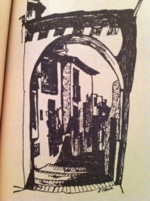
    Sketch of Benidorm, Spain by Sylvia Plath, where Plath honeymooned with Ted Hughes. Photographed from illustrations in Bitter Fame by Anne Stevenson.

    June 27, 2012
    artists, quotes, Sylvia Plath

  • Sylvia Plath Biography

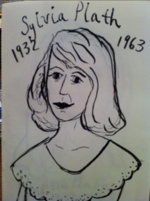
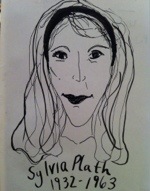
    Halfway through Bitter Fame, a Life of Sylvia Plath by Anne Stevenson, I can say that although she does not paint as sympathetic a portrait of Plath as does Alexander in Rough Magic, she does get to the inner struggles Plath experienced that led to her poetic apotheosis in a more acute way.

    Alexander had access to Sylvia’s mother while writing his biography, but he was writing blindly, because Ted Hughes did not allow him to view Sylvia’s letters or journals.

    Hughes’s sister, Olwyn Hughes, worked with Stevenson and allowed her to quote extensively from Plath’s journals and letters.

    Plath’s letters to her mother, as one might expect, give an optimistic report of Plath’s active social life and hard work at Smith and later at Cambridge, while her journal entries show she had an active, healthy sex life that unfortunately plagued her.

    Part of Plath’s problem lay in her inability to reconcile her “swing from violent vampire to virtuous nun,” as Anne Stevenson writes (28).

    The controversy around Plath’s life and death centers around her relationship with Ted Hughes. Obviously, she had an artistic temperament and was ambitious to the extreme. At the same time she was conformist and wanted to raise a family like her mother did.

    Even though I was born three decades after Plath, I understand her ambivalence about motherhood, art, sexuality, and a career.

    But her angst and passion led her to explore or flirt with death. She was too impatient to find out what lay beyond the moon at night.

    Of course the shock of losing Hughes would have brought about a despair she couldn’t find a way to exit, but reading her Ariel poems, one realizes she was in the throes of a Dionysian fury that went beyond Hughes.

    In the end, casting the blame for her death on Hughes means nothing. There are only the poems, which are as grand and sharp as polished steel.

    20120625-113442.jpg

    20120625-113507.jpg

    June 25, 2012
    drawing, poetry, Sylvia Plath

  • Evening Poetry

    In his latest collection, We Almost Disappear, David Bottoms expresses stoic tenderness toward the passing of our human lives.

    The poems focus on the speaker’s memories of childhood and family, with many of the poems lingering on the narrator’s relationship with his father, his “old man.”

    Toward the end of the book we see the declining father shuffling on his walker against a backdrop of the Chattahoochee hill country, while the speaker contemplates the under currents running through existence.

    This collection narrates life with a reverential tone punctuated with the concrete imagery of everyday reality: a rusted truck, afternoon traffic,  a telephone that “shrieks in the middle of the night.”

    The tender attention to the details of light and objects reminds me of a Vermeer painting.

    The poems are shorter in length–only two are longer than a page. The verses lilt across the page in long lines that are often dropped or indented, inviting the reader to pause and savor the images and feelings.

    What will stay with me for a long while is the strong sense of abiding love that emanates from these poems–a cherishing of family, nature, words and even dreams.

    This love reveals itself through the inner monologues of an introspective soul who does not take himself too seriously.

    June 24, 2012
    David Bottoms, poetry

Previous Page Next Page

Blog at WordPress.com.


Loading Comments...
 

    • Subscribe Subscribed
      • Balanced On the Edge
      • Join 241 other subscribers
      • Already have a WordPress.com account? Log in now.
      • Balanced On the Edge
      • Subscribe Subscribed
      • Sign up
      • Log in
      • Report this content
      • View site in Reader
      • Manage subscriptions
      • Collapse this bar