Balanced On the Edge

    • About Balanced on the Edge
    • Publications
    • Swimming This

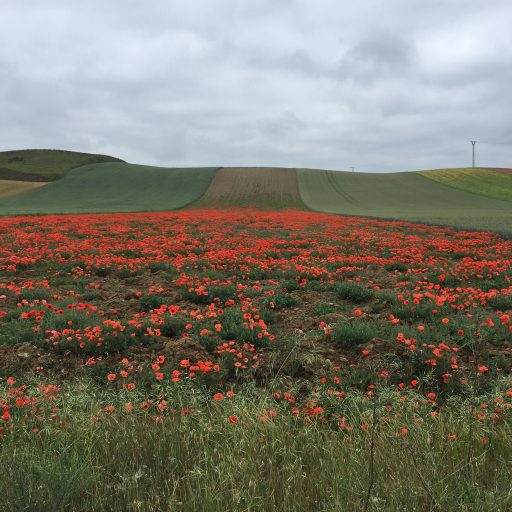
A field of red flowers and a cloudy sky
Camino de Santiago
  • Dream 2

    .

    A man is filling a hole with very white sand. The opening looks like the hollow a stone makes in the moment it hits a body of water.

    Every time he shovels sand into the pit, he sinks deeper, as though the circle were swallowing him. He begs the hole to have mercy on him, and to my surprise, it listens to him.

    In a sudden burst of energy the man plants a tree with human feet in the spot where he had been filling the hole.

    November 10, 2010
    dreams

  • Dreams and The Netherlands

    Dream: I can stop real time with my remote and rewind. When I start real time back again, I’ve missed what happened while I was rewinding. My professor, who is wearing a sari,  is talking about a Manila lotion that people put on their  nipples, and I tell her “You’re very kinky.” The other students laugh at my cheeky comment. I worry I’ve been disrespectful. And then I wonder why I’m in her class, considering it has nothing to do with poetry. She discusses paranoia versus rhetorical strategies (kind of like poetry, huh?) I can’t type her words fast enough.

    The next  IASD conference, AKA dream camp, will be in the Netherlands this summer. I want to go to there.


    November 9, 2010

  • Reading and Writing Round-up

    It’s been a while since I’ve shared the state of my writing life online. Teaching freshman composition takes up a good chunk of my energy–  I spend a lot of time writing responses to their writing on our class blog. Alright, I admit I also waste time on facebook.

    Reading

    In my two classes (a workshop and a seminar) we’ve been reading William Carlos Williams, Elizabeth Bishop, John Berryman, Frank O’Hara, Gwendolyn Brooks, and now Frank Stanford. We still have to get to James Wright, Sylvia Plath, Everett Maddox, and Andrew Hudgins.


    Writing

    This fall  Ouroboros Review, the magazine Jo Hemmant and I started, published three of my poems in issue five: “Last Lollipop,” “Between Loads of Laundry,” and “Pain Drives by the Delivery Room at Wayside Hospital,” found on pages 12-13. I wrote these poems in 2009, two of them during a workshop I was in at GSU.

    Many thanks to Jo, Carolee Sherwood, and Jill Crammond-Wickham for putting together another great magazine. Sara Hughes, fellow GSU poet has work in this issue.  Her lovely poem, “The Secret of Life,” appears on page two.

    There’s an interview with poets January Gill O’Neil and Kelli Russell Agodon, in which they discuss the writing life and how to balance creativity with adult responsibilities. Not easy!  Their poems after the interview will knock your socks off.

    The word on the street is that Ouroboros Review will be changing editorial directorship before the next issue comes out. It’s a gorgeous magazine, one of the few truly international reviews that publishes both online and in print. Ouroboros is available for purchase at Magcloud.

    Jo Hemmant has done a wonderful job maintaining the unique tone and style of the art and poetry that appears in each issue. I love discovering poets and artists living in South Africa, France, Germany, Ireland, New Zealand, England, Canada, as well as the U.S. Whoever takes over the job will be inheriting a fine showcase of world writers.

    In 2010 Jo Hemmant’s  independent press, Pindrop, is launching A Suitable Girl by poet Michelle McGrane.


    November 7, 2010

  • From Poetry to Postal

    It’s impossible to pigeonhole renaissance man Dave Bonta. Poet, essayist, naturalist, photographer, and editor of qartsilunni are just a few of the hats he wears.

    In January 2010, Phoenecia Publishing (Montreal) released  his first printed collection of poetry, Odes to Tools. I say first printed collection, because Bonta shares many of his poems online at his long standing blog, Via Negativa, where he also highlights the literary endeavors of his fellow bloggers under the heading “Smorgasblog.” We love it when our work appears on Dave’s column–it calls for a Snoopy dance, or at least a tweet!

    Bonta is a web-based curator of literary arts. He collects video poems at his website, Moving Poems, and he manages a related forum where video poem enthusiasts can share their finds on the web.

    And now his latest project is up and running, Postal Poetry, an incarnation of a photography and poetry e-zine that he and Dana Guthrie Martin started in 2008.

    Dave published seven of my postcard poems between 2008 and 2009– I’m grateful to Dave for gathering these poems together again in such a beautiful layout. The poems were fun to create, especially the ones I wrote to quirky photos Dave and Dana chose for the contests they sponsored.

    October 29, 2010

  • The Dalai Lama at Emory: The Creative Journey

    Just reaching Emory from my house was an exercise  in patient acceptance, considering we got stuck in a typical Atlanta traffic jam about five miles away from the mall where we had to park. Philosopher tried to calm me down, saying “Oh, it’s not so bad. We’ll get there.” And then after I took a few deep breaths he said, “Man, this really sucks.” Freeboarder tuned everything out by listening to music on his iPod. But after merging onto three different highways and taking a shuttle to the venue, we arrived at the auditorium for the Dalai Lama’s teachings.

    His Holiness walked onto the stage with Richard Gere, Alice Walker, his translator, and a few professors from Emory. The audience stood as he glided in his scarlet robes toward an armchair in the center of the stage. He stooped forward, as if his head were permanently lowered from all the years spent meditating, but when he sat down his posture was upright. He spent a few moments adjusting robes to cover his bare arms, and then he put on a red visor. He looked like he was clowning around when he put the visor on, and I wondered if it was a souvenir from Emory.

    My main impression from the Dalai Lama is one that many have mentioned about him–he has a child-like exuberance and an infectious laugh. He emanates joy. He made several jokes during the talk, which I didn’t always understand, but it didn’t matter. Just hearing him laugh made me feel the the truth of the prayer Om Mani Padme Hum, which Robert Thurman translates  into English as “the jewel is in the lotus flower” or the English saying “God is in his universe, all’s right with the world.”

    The room was vast and dark, lit only by a few blue halogen lamps along the reserved seats on the floor. My sons and I sat in the bleachers, up  in the nosebleed section, as they used to call seats farthest from the stage when I’d go to Aerosmith concerts as a kid. The Dalai Lama sat in the center, with Alice Walker and Richard Gere to his right, a translator to his left. The speakers were flanked by enormous screens that zeroed in on close-ups of their faces. Most of the time I focused on the screens, because from where we sat the speakers looked like figurines in a doll house.

    An art professor from Emory began The Creative Journey discussion with a question: How does art fit into the spiritual path? After huddling with his translator for about twenty seconds, the Dalai Lama’s answer was “I don’t know.” The crowd cracked up and cheered.

    Richard Gere and Alice Walker  had a lot to say about the subject. Both would chime in when the Dalai Lama was conferring with his translator. The three of them spoke about compassion as the root motivation of art; the role of the ego when creating; the differences between Tibetan art and Western expressive creativity (the Dalai Lama was reluctant to speak about this theme); the need to embrace the joy in the struggle; the struggles of Tibetans, South Africans, African Americans; the spiritual path as a way for Americans to escape the mediocrity that has invaded many aspects of our society.

    Alice Walker spoke about her evolution as an artist and how she used to write out of sadness. But she encouraged young artists to persevere, because over the course of her journey she has learned to experience great happiness, even when she’s in tears over a character she has created.

    Richard Gere talked about his early acting career and how he was just as troubled and angry as the young men he played in films. He and Alice Walker expressed gratitude for having found meditation, and how the peace they reached through sitting quietly has helped them become more creative and more imaginative.

    The best part of the day was getting to look over at my sons during the talk. They listened as best they could to the wisdom and experience of the three speakers. It was hot in the bleachers, and His Holiness was hard to hear at times. His voice is somewhat low,  and even though he speaks fluent English he has a strong Tibetan accent.

    Richard Gere and Alice Walker didn’t agree about a few points, which provided us with a good discussion at Fellini’s, where we went for pizza afterward. In my next post I’ll write more about the specific points I remember from “The Creative Journey.”
     

    October 20, 2010

  • Red Jaw

    The vet has ordered a month’s course of antibiotics to cure the infection in Red’s mandible.  The abscess, which had grown to the size of a toddler’s fist, is now as large as a peach pit.

    When I was at the animal hospital I met a woman who runs a mutt rescue operation. She showed me before and after photos of dogs whose previous owners had let the dogs’ diseases run amok.

    October 9, 2010
    dogs, mutts

  • The Kermess

    My in-laws had a print of “The Kermess” in their cottage. I used to look at it quite a bit, but I didn’t know it was depicting a particular dance until I read William Carlos William’s poem about the painting, titled, “The Dance.”

    In the poem Williams focuses on the dancers’ bodies–their bellies and shanks in particular, and how strong the dancers must have been to prance about so lightly with such large frames.

    I like how Brueghel painted common folk, people who carried their own wooden spoon with them in their back pockets so they would always have a handy utensil for dining. There’s a lot to imagine in the painting, and I can see why Williams wanted to write about it.

    Williams often wrote about the poor, even though he was a doctor and highly educated. There’s a certain kind of mythologizing present, almost a sort of nostalgia, when someone who is not poor writes or depicts the stories or the misfortunes of others. I know many painters, filmmakers, and writers do just that.

    In my own poems I think of writing about social problems, but I want to be careful about not appropriating someone else’s story as my own. To avoid this spurious representation of myself as the other, I need to do what Williams did–show how I am observing and recording my thoughts and impressions. In this way there is still a need for the first person singular.

    Not to get too theoretical, since all I know about literary theory is what I’ve heard from grad students and the bits I’ve read on Wikipedia. There’s also an eerie documentary about Derrida that gave me a few hints.

    September 6, 2010
    Brueghel, William Carlos Williams

  • Frozen Socks and Eliot

    The frozen socks have been a big hit with Red and Duffy. They chew on the knotted socks until the socks thaw, and then they play tug-of-war with them.

    This morning they ran in circles through the kitchen, living room, and dining room, and now they’ve gone to their separate corners to chew on fresh, frozen socks.

    With the house now quiet and the world calm, I’ll return to reading Eliot’s 1920 Poems. Randy Malamud’s critical introduction to The Wasteland and Other Poems has been big help in my understanding of the collection. There are so many seemingly random allusions that I was scratching my head in bewilderment.

    I’m thinking of writing my research paper about this question: does the anti-semitism in Eliot’s poems contradict his application of Buddhist philosophy?

    What would Red and Duffy say? They’d probably tell me to stop running in circles, chew on a frozen sock, and then take a nap.

    August 29, 2010
    dogs, Duffy, Red

  • An Office with a View

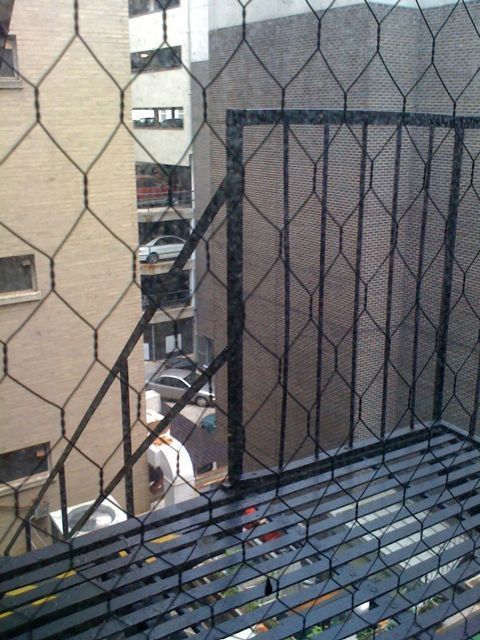
    My office looks out onto rat’s alley. Yes, I’m alluding to The Waste Land, but there really are rats down there. They must like the vat of discarded fast-food grease next to the parking deck.

    But there’s a view, with natural light. And the air conditioning works. A huge improvement on last year’s basement office.

    August 24, 2010
    new school year, rats, views, waste land

  • Dali and Poetry

    I visited the Dalí exhibit again, this time with a poet friend who hosts the radio show melodically challenged on WRAS. Her program broadcasts on Sundays from 2:00-4:00 in the afternoon, and features poets reading their own works, along with music that enhances the show’s theme. One of the more recent playlists highlighted poems about birds, or poems that include birds. I intend to tune in this Sunday.

    It was fun to walk through the exhibit a second time. At my friend’s suggestion, we used the audio tour as we progressed through the halls, and we ended up finding out a lot that would have gone unnoticed had we merely meandered along on our own. One interesting aspect the curators brought out was how Dalí experimented with how he applied his medium to the surface–he used a loaf of bread, his mustache, a rhinoceros horn (which he equated with the unicorn, a symbol of virginity), and an octopus. He also shot paint pellets out of a gun, a technique he dubbed “bulletism.”

    I also found out why he was kicked out of the Surrealist movement: with Marcel Duchamp’s blessing he included a painting  with religious iconography in a Surrealist exhibit, a theme the surrealists rejected. So he was ousted. The title of this exhibit is Dalí, The Later Works, a time period that until recently has not been admired by art critics, maybe because of the religious nature of the pieces. I did read, however, that Dalí declared himself a “Catholic without faith,” and that he did not believe in miracles.

    I’ve already written two drafts of poems in response to his paintings. This summer has been very contemplative for me. I’ve been reading After by Jane Hirschfield and studying Buddhism, meditation, yoga. All the mind work, plus lap swimming, to calm my inner waters.

    Even though I want to be at peace, I’m very drawn to the zany world of Da Da, Surrealism, and dreams. I keep thinking that if I remember my dreams and explore the images the meaning of everything will fall into place. A pretty illusion.


    August 18, 2010

Previous Page Next Page

Blog at WordPress.com.


Loading Comments...
 

    • Subscribe Subscribed
      • Balanced On the Edge
      • Join 241 other subscribers
      • Already have a WordPress.com account? Log in now.
      • Balanced On the Edge
      • Subscribe Subscribed
      • Sign up
      • Log in
      • Report this content
      • View site in Reader
      • Manage subscriptions
      • Collapse this bar