Balanced On the Edge

    • About Balanced on the Edge
    • Publications
    • Swimming This

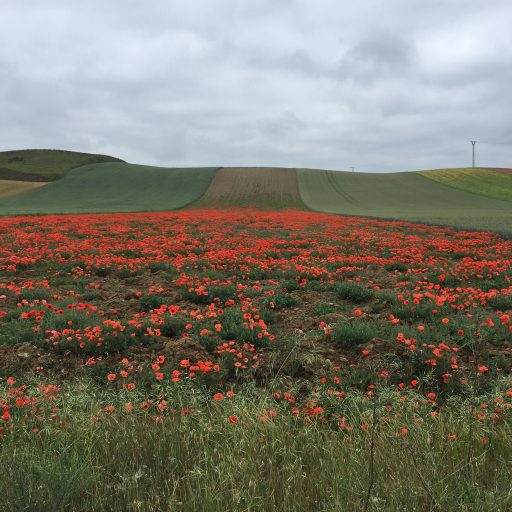
A field of red flowers and a cloudy sky
Camino de Santiago
  • Review of Ouroboros Review Issue Four

    via flickr.com

    “Shanghai – Bund Sightseeing Tunnel”

    This photo reminds me of Jo Hemmant’s first search for images to symbolize Ouroboros Review. She wanted a photo reminiscent of a snake eating its tail without being obvious, and she ended up finding a black and white picture of a tunnel near London–a circle that hinted at the deferred infinity of poetry.

    Now in it’s second year and its fourth issue, Ouroboros Review is stronger than ever. Two new editors have come on board after I left: Carolee Sherwood and Jill Crammond Wickham, friends, poets, and and artists.

    This latest issue contains photos from my internet poetry friends Jennifer Delaney and Deb Scott, as well as Atlanta poet Julie Bloemeke. Deb’s poem will make you want to make love to the nearest man or flower in your vicinity, and Julie’s poems about abandoned structures will cause you to stop and hear the wind blow through the empty rooms.

    Other friends who have work included are Collin Kelley, who interviews the fabulous Cecilia Wolloch,  Michelle McGrane, who is on a roll with her period pieces and persona poems, and Elizabeth Polkinghorn, who is now publishing under her own name.  Her poem”To Stephan and Yakov” is a heartfelt, honest piece that shows her compassion and sensitivity.

    There are several poets who are new to me as well, who have won me over with the grace and ethereal quality of their work: Sophie Mayer, Susan Millar Dumars, and many others.

    It was nice to be reacquainted with the strong work of poets whose poems were included in previous issues, such as John Walsh, from Ireland, and Iain Britton, from New Zealand.

    One aspect that I love about Ouroboros Review is the London-US connection. Because the magazine contains poetry in English from all over the globe, there is an open, light quality to the collection that opens me and fills me up. Editor and friend Jo Hemmant has a deft touch for knowing what pieces work together.

    Thanks to the new editorial board for providing me with a delightful hour and a half of relaxing reading. I should also be grateful my sons went to the movies too–no electric guitars raging from the basement to compete with my attention to the words.

    Check out issue four at www.ouroborosreview.com.
    December 18, 2009

  • Review of Robert E. Wood's Gorizia Notebook

    For poetry lovers who dream of going to Italy (who doesn’t?), I suggest the chapbook Gorizia Notebook (Finishing Line Press, 2009), by Robert E. Wood. Most of the poems in the collection are brief, and although they don’t follow the strict form of an Italian sonnet, they read like finely-crafted “little songs,” the original meaning of the word sonetto in Italian.

    Even though the poems are well honed, the title and the brevity of the pieces suggest a motif of quick sketches of Italian life seen through the eyes of an unobtrusive speaker, presumably an outsider. While reading the poems, I had the impression of a painter working plein air, capturing scenes in quick brush strokes.

    The poems contain references to Italian street names, monuments, plazas, cities, films, music, and history, which illustrate the speaker’s intimate knowledge of the environment, in spite his outsider status. Some of the titles are written in Italian, and some of the dialogue too, implying his desire to become one with his surroundings.

    There are few discursive lines–the persona allows the sights and sounds of Italy, and his relation to them, speak for themselves. When the speaker reveals his point of view, he does so with self-effacing wit.

    Robert E. Wood is a professor of literature and film studies–his poems display the depth of his readings, his appreciation of art, and his travels. By reading Wood’s collection, I envisioned modern Italian life amid Roman ruins, fountains, and Mediterranean light, a society that to this day lives with the aftermath of WWII.

    Gorizia Notebook is a delightful collection of understated emotion and witty observations.

    If you would like to read sample poems from Robert E. Wood, you can find several pieces in the first three issues of ouroboros review. Bob and I are from the same town, but first met online when he and a few other Georgia Tech poets shared some of their work with ouroboros. I later had the opportunity to meet him at various poetry gatherings around the city, including the Decatur Book Festival, where I heard him read. He tells great background stories to go along with his poems!

    December 17, 2009
    Finishing Line, Gorizia Notebook, Italy, Press, Robert E. Wood

  • Pushcart Prize Nominations and Peony Moon Picks

    Many thanks to  poet Michelle McGrane, author of peony moon, for compiling an exhaustive list of poetry picks for 2009. Michelle posted nine days of readers’ top-three poetry collections of 2009. You can find my picks here.

    Although the three books listed were top on my list the day I sent Michelle my selections, I could easily have added others. Each time I went to peony moon to see what the latest collections were, I thought of other books I could have listed, such as Robin Kemp’s fabulous This Pagan Heaven.

    Kemp’s collection has been nominated for a Pushcart Prize, and well deserves to win.

    I’d also like to thank Barry Harris, editor of the Tipton Poetry Journal, and Katie Kowalski, assistant editor, for including my poem “Everything is a Sign” among their nominations for the Pushcart Prize for 2009. I also need to give Read Write Poem their props, since my idea to write the poem came from one of their writing prompts.

    Here’s a complete list of the poems the Tipton Poetry Journal nominated this year:

    2009 Nominations

    Gilbert Allen Inside Self-Storage (Winter 2009)
    Matthew Landrum Rebecca With Tequila Shot (Spring 2009)
    Bonnie Maurer Hymn To A Lost Breast (Spring 2009)
    Christine Swint Everything is a Sign (Spring 2009)
    Michael Brockley When the Woman in the White Sweater at the Cancelled Charles Simic Reading Asked If I Was David Shumate (Summer 2009)
    Ruthelen Burns Fallen (Fall 2000)
    December 15, 2009
    peony moon, Pushcart Nominations 2009, Pushcart Prize, Robin Kemp, This Pagan Heaven, Tipton Poetry Journal

  • Is it just Lust?

    This past fall I took a graduate course covering Robert Frost, the sonnets of Edna St. Vincent Millay, Wallace Stevens, and Richard Wilbur, all American poets esteemed for their attention to poetic form. The professor gave us his in-depth analysis of the lives, the times, and the poems of these poets. Although my appreciation for Stevens has changed from awe and confusion to a quiet respect, there are areas concerning his life and his work that still make me pause.

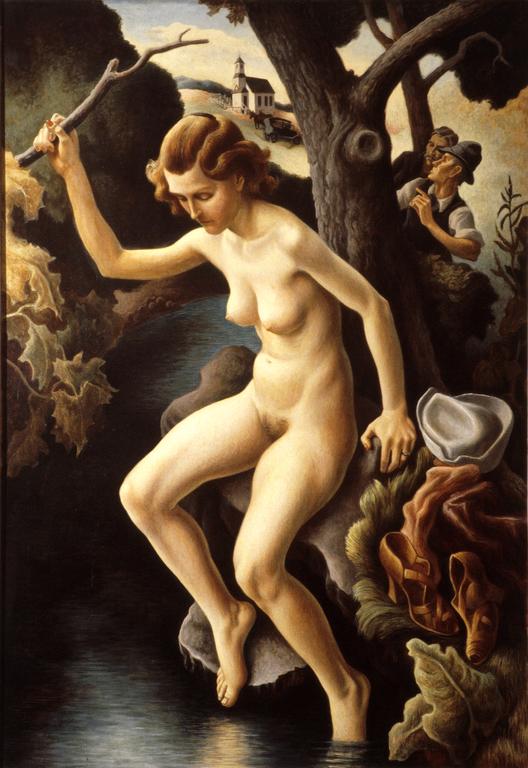
    Recently I posted a painting of Susanna and the Elders by Thomas Hart Benton, because it depicts a scene in a Stevens poem we read: “Peter Quince at the Clavier.” Peter Quince is a character from A Midsummer Night’s Dream–he was one of the players who served as comic relief. In this poem, Quince is the speaker. Using Quince’s name was Stevens’ way of making a joke, because Quince could never have expressed himself as eloquently as the speaker does in the poem.

    The poem uses the story of Susanna and the Elders as a rhetorical situation for the speaker. Quince plays the piano (the clavier) because of the desire he feels for his beloved.

    Thinking of your blue-shadowed silk,
    Is music. It is like the strain
    Waked in the elders by Susanna;

    The basic argument of the poem is that poetry is feeling. If I feel desire, I will make music. My art (or poem, song…) will convey my feelings to the viewer or the listener. The reader of the poem will have similar thoughts to my own– the mere thinking of  “your blue-shadowed silk” becomes art (or music, poetry, etc…). Thought and feeling equals art when it is reproduced for another to perceive.

    But the story of Susanna complicates the argument of “Peter Quince at the Clavier,” because the speaker compares his desire for “the blue-shadowed silk” of his beloved to the desire the elders felt for Susanna. And the poem becomes even more byzantine because Quince is playing the clavier. The story of Susanna serves as a backdrop to a concert.

    My blogging friend, poet and writer Julie Buffaloe-Yoder, summarized the story of Susanna in my last post on this poem, and she brought up a pertinent point:

    [The elders] cornered Susanna in the garden and told her they would have her put to death if she did not have sex with them. If she said no, they told her they would publicly announce that she had been having sex with a young man. The penalty would be death.

    She remained loyal to God, and would not have sex with the elders, regardless of the threat of death. God saved her for her faithfulness. The elders were put to death for their false witness. It was unusual in her time and culture for a woman to be spared death when accused by elders.

    The elders were blackmailers, voyeurs, horrible in every way. The story is part of the Apocrypha, portions of the Old Testament that were excised from the Protestant Bible. Susanna and the Elders comes from Book 13 of Daniel.

    I’m still confused why Stevens used the Susanna and the Elders story to depict merely lust. In the Old Testament, Daniel saved Susanna from the elders by proving their false testimony. And Susanna would not relent to the elders’ lust for her. Maybe Stevens uses the story as a symbol for lust, and I’m over-thinking it. The symbol could be just one more Modernist affectation, to be considered in an abstract light.

    What do you think? Was it a good story to invoke the feeling of lust? I think many women will balk at Stevens’ poem, in spite of its perfection of form.

    December 14, 2009
    Julie Buffaloe Yoder, Modernism, Peter Quince at the Clavier, Susanna and the Elders, Wallace Stevens

  • Thomas Hart Benton, Susanna and the Elders

    ThomanHartBenton
    This painting by  American artist Thomas Hart Crane (1899-1975) depicts the story of Susanna from the Book of Daniel, a story excised from the Old Testament. Susanna and the Elders forms part of the narrative of “Peter Quince and the Clavier” by Wallace Stevens, a poem we read in a course I’m taking.

    Stevens used the story as a way of illustrating the concept of lust, although in the poem he merely calls it desire. When I read the poem I was a little confused (and I still am) by Stevens’ choice of subject matter. To me, the elders were basically peeping toms or voyeurs. Anyway, I like this painting. It’s a contemporary spin on an old image.

    December 4, 2009

  • Read about Karen Head's collaborative digital poetry project

    via angelfire.com

    Poet and editor Sam Rasnake has published Karen Head’s poetry project at his online poetry and art journal, Blue Fifth Review. Read the exquisite corpse poem, “Monumental,” which she directed from her perch atop the Fourth Plinth on Trafalgar Square in London. She also includes process notes about how she views art and collaboration.

    I played a very small role in the project by writing one of the lines in the exquisite corpse poem. Even still, it was exciting to share in this digital experience. Although we each could hear Karen talking and see her in real time via the web cam, we communicated to her through twitter, sending her our lines after she wrote to tell us who was next. By the end of the hour, my T-shirt was damp with sweat, and I only had one line to write!

    November 28, 2009
    Blue Fifth Review, collaborative poetry, Karen Head, twitter

  • Fleet Foxes – White Winter Hymnal

    http://www.youtube.com/v/DrQRS40OKNE&hl=en&fs=1

    via youtube.com

    My son introduced me to Fleet Foxes a few months ago, and I finally have their album. This is lovely, soaring music. It reminds me of early English ballads, the sixties, and singing around the campfire. The Claymation works too.

    November 24, 2009

  • Charter for Compassion

    http://www.youtube.com/v/DCG4qryy1Dg&hl=en&fs=1

    via youtube.com

    I found this video after starting to read The Case for God by Karen Armstrong. It’s a fascinating book for anyone who feels disenchanted with modern religious institutions, but who also wants to live a spiritual life. Armstrong has created a Charter for Compassion based on the Golden Rule: Do to others only what you would would want them to do to you in a similar situation. In one of her talks on TED she says that the Golden Rule, formulated by Confucius, forms the basis for Judaism, Christianity, and Islam. In other words, compassion is the foundation of living a joyful, spiritual life.

    November 21, 2009

  • ouroboros review issue four

    http://static.issuu.com/webembed/viewers/style1/v1/IssuuViewer.swf?mode=embed&layout=http%3A%2F%2Fskin.issuu.com%2Fv%2Fdark%2Flayout.xml&showFlipBtn=true&documentId=091112110436-40019f57103845bb9500d3e76670e7b8&docName=issuefournovember12&username=ouroborosreview&loadingInfoText=issuefourouroboros&et=1258025130578&er=71

    via ouroborosreview.com

    Jo Hemmant, Jill Crammond Wickham, and Carolee Sherwood have just released issue four of the fabulous ouroboros review. The featured poet is Cecilia Woloch, who recently launched her latest collection, Carpathia. Your weekend poetry reading is sure to be a delight, since ouroboros is only a click away!

    November 12, 2009

  • DramaTech Theater – Shows – Current

    current show

    On this page you will find information about DramaTech’s current major production. Information on past shows is also available.

    Our current production is:

    Twelfth Night

    A young woman, Viola, is separated at sea from her beloved twin brother and tossed upon the shores of the magical kingdom of Illyria. She disguises herself as a man and is drafted by Duke Orsino to woo the stubborn Lady Olivia. Romantic havoc ensues when Olivia becomes smitten with Viola (dressed as a man) and Viola, in turn, falls for Orsino. A hilarious subplot involving Olivia’s hapless household makes Twelfth Night an enthralling comedy about illusion, deception, and the extraordinary things people do for love.

    Performances:

    • Fri Oct 30 2009 at 08:00 PM
    • Sat Oct 31 2009 at 08:00 PM
    • Wed Nov 04 2009 at 08:00 PM
    • Thu Nov 05 2009 at 08:00 PM
    • Fri Nov 06 2009 at 08:00 PM
    • Wed Nov 11 2009 at 08:00 PM
    • Thu Nov 12 2009 at 08:00 PM
    • Fri Nov 13 2009 at 08:00 PM
    • Sat Nov 14 2009 at 08:00 PM

    –>

    Busy this weekend? Don’t worry! Check out the upcoming section of the site for a guide to everything we’ve currently got planned.

    via dramatech.org

    Robert E. Wood is directing this Georgia Tech Production of Twelfth Night. Make your reservations now!

    November 5, 2009

Previous Page Next Page

Blog at WordPress.com.


Loading Comments...
 

    • Subscribe Subscribed
      • Balanced On the Edge
      • Join 241 other subscribers
      • Already have a WordPress.com account? Log in now.
      • Balanced On the Edge
      • Subscribe Subscribed
      • Sign up
      • Log in
      • Report this content
      • View site in Reader
      • Manage subscriptions
      • Collapse this bar