Balanced On the Edge

    • About Balanced on the Edge
    • Publications
    • Swimming This

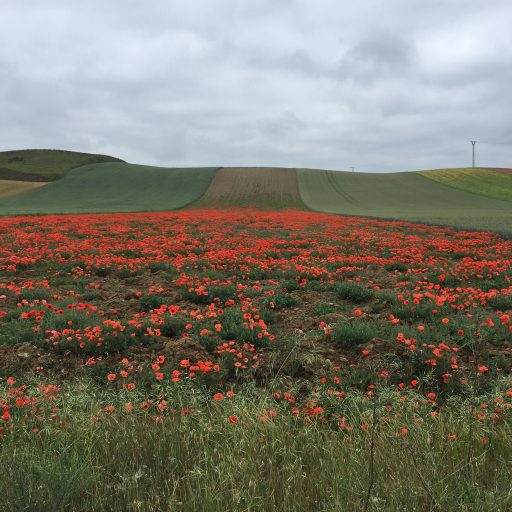
A field of red flowers and a cloudy sky
Camino de Santiago
  • Family and art at the beach

    Night falls at the pier
    Night falls at the pier

    Spending a few days at the beach with my sister and her daughter was a welcome change from the ordinary, and it was also nice to see my husband, my son and his friends have a good time there. The boys bought a raft and a pirate’s flag to ride the waves, while the three adults took care of the three-year old. It can take that many sometimes… .

    My sister is a single mom who does an amazing job with her daughter – so much patience and attention, which is what children need and deserve. In addition to being a skilled parent, she’s also an incredible artist. She can do it all really, sculpture, portraits, lithographs, but her specialty is 3-D animation with a focus in mat painting and landscapes. While we were at the beach she had one chance to go out to a pier to paint. Lately she has been interested in plein-air painting, and keeps a portable easel and paint set in the trunk of her car. This time she painted a tree with a view of the marsh in the distance.

    Here’s a link to my sis’s website, which showcases some of her landscape paintings. Can you tell how proud I am of her?

    If you’re interested in plein-air, here’s a link to the Plein-air Painters of America.

    June 24, 2009
    beach, plein-air painting

  • riverbabble's summer soltice issue now online

    Below is a flier announcing riverbabble 15. I have a short fiction piece included. It’s a few days after the solstice, but the evening light is still with us, a nice time to read. Here’s a direct link to my piece, ‘Dusk.’

    Celebrate the summer solstice

    and start your summer reading with

    riverbabble15

    Bloomsday issue

    is now online at

    http://iceflow.com/riverbabble/Welcome.html

    Featuring

    FICTION

    Margot Comstock, Sara McAulay, Bev Vines-Haines, Patsy Covington, Kyle Hemmings, Rick Spuler, Thomas Kearnes, Andrew M. Lopas, Ward Jones, Marjorie Carlson Davis

    POETRY

    Rafael Jesús González, Francine Witte, Anthony Adrian Pino, Julene Tripp Weaver, Charles Clifford Brooks III, Luigi Monteferrante, Jason Price Everett, Paul Lobo Portugés, J. Bradley

    PROSE POEMS / FLASH FICTION

    Doug Mathewson, Christine Swint, Andrew M. Lopas

    COVER PHOTOGRAPHY

    Christopher Novak

    Visit us here:

    http://iceflow.com/riverbabble/Welcome.html

    June 22, 2009
    micro fiction, riverbabble

  • Charleston here I come!

    My sis and I are going to the Charleston, SC for a week with our respective families, which means I probably won’t be posting here for a week (unless I get motivated to figure out how to use WordPress on my iPhone).

    I will, however, continue to entertain you with my witty observations (she says tongue in cheek) on Twitter. If you look to the pink box to your left you will see my 140 character aphorisms.

    June 14, 2009
    iPhone, twitter

  • Popular British Ballads

    As part of the MFA program I’m starting, I need to read and ‘explicate’ many poems. Although I have three years to complete the readings, I’m beginning now because I’m a nerdy book worm, un ratón de biblioteca, as they say in Spanish.

    To make the project more interesting, I thought I’d share some of my observations of the poems I read. Let me make one disclaimer: I’ve never been a scholarly sort of person, and even though I’ve been a teacher and a student all my life, I’m more apt to share my gut reactions rather than a true literary analysis. Unless a professor requires it, I doubt I’ll read what real literary critics have to say about the poems. Hope that’s OK with everyone.

    Popular British Ballads begin my list. Reading these ballads is like getting a glimpse into long ago daily life in the British Isles. The first one I read is titled Lord Randal. It’s Scottish, from the 1500s, passed down to us by Francis James Childs, who compiled and edited The English and Scottish Ballads, 1892-1898. You can read every single one of them right here.

    The end words of each stanza are the same: son, man, soon, down, and in fact each line ends with the same phrase or question, because it’s a song.

    A young man named Lord Randal is asking his mother to make his bed because he is sick at heart and he soon will die, both from heartache and from poisoning.

    The mother goes on to ask him what he’s going to leave behind to all his loved ones. At first those stanzas made the mother appear to me like a mercenary sort of mom, the kind who ‘knows the price of everything and the value of nothing’ (Oscar Wilde’s definition of a cynic). I thought, is she kidding? The kid is dying and she’s already divvying up the loot?

    But more than likely death was more a part of everyday life then, and practical matters like wills were discussed openly. The talk of leaving behind worldly possessions also adds to the pathos of the story, that such a handsome young man, and wealthy too, is dying.

    Of course he says the girl who has double crossed him will only get ‘hell and fire.’

    In addition to this version I found on Youtube, there are also Appalachian singers who’ve recorded many of these ballads, as the songs were passed down to them by their ancestors.

    1
    Here’s a version I found on Youtube by poet and painter Michael Foster:

    http://www.youtube.com/v/TeMPS-L94Dk&hl=en&fs=1&rel=0&color1=0xcc2550&color2=0xe87a9f&border=1

    And here’s the ballad:

    Lord Randal

    “O where ha you been, Lord Randal, my son?
    And where ha you been, my handsome young man?”
    “I ha been at the greenwood; mother, mak my bed soon,
    For I’m wearied wi hunting, and fain wad lie down.”

    “An wha met ye there, Lord Randal, my son?
    And wha met ye there, my handsome young man?”
    “O I met wi my true-love; mother, mak my bed soon,
    For I’m wearied wi huntin, and fain wad lie down.”

    “And what did she give you, Lord Randal, My son?
    And wha did she give you, my handsome young man?”
    “Eels fried in a pan; mother, mak my bed soon,
    For I’m wearied wi huntin, and fein wad lie down.”

    “And what gat your leavins, Lord Randal my son?
    And wha gat your leavins, my handsome young man?”
    “My hawks and my hounds; mother, mak my bed soon,
    For I’m wearied wi huntin, and fein wad lie down.”

    “And what becam of them, Lord Randal, my son?
    And what becam of them, my handsome young man?
    “They stretched their legs out and died; mother mak my bed soon,
    For I’m wearied wi huntin, and fain wad lie down.”

    “O I fear you are poisoned, Lord Randal, my son!
    I fear you are poisoned, my handsome young man!”
    “O yes, I am poisoned; mother, mak my bed soon,
    For I’m sick at the heart, and fain wad lie down.”

    “What d’ye leave to your mother, Lord Randal, my son?
    What d’ye leave to your mother, my handsome young man?”
    “Four and twenty milk kye; mother, mak my bed soon,
    For I’m sick at the heart, and I fain wad lie down.”

    “What d’ye leave to your sister, Lord Randal, my son?
    What d’ye leave to your sister, my handsome young man?”
    “My gold and my silver; mother mak my bed soon,
    For I’m sick at the heart, an I fain wad lie down.”

    “What d’ye leave to your brother, Lord Randal, my son?
    What d’ye leave to your brother, my handsome young man?”
    “My houses and my lands; mother, mak my bed soon,
    For I’m sick at the heart, and I fain wad lie down.”

    “What d’ye leave to your true-love, Lord Randal, my son?
    What d’ye leave to your true-love, my handsome young man?”
    “I leave her hell and fire; mother mak my bed soon,
    For I’m sick at the heart, and I fain wad lie down.”
    June 13, 2009
    Lord Randall, Popular British Ballads

  • film movement

    After reading Odessa’s post (author of the inspirational blog freefalling me) about the film Balzac and the Little Chinese Seamtress, I started thinking about independent movies I’ve seen recently, and Viva Cuba came to mind.

    Viva Cuba, written and directed by Juan Carlos Cremata Malberti, tells the story of a girl and a boy on the cusp of puberty who go on a cross-country trek to find the girl’s father. It’s a movie about children, but not made for children, one of my favorite genres. Just as Odessa found Balzac and the Little Chinese Seamstress, I found this movie at my local library. It’s part of a monthly film club sponsored at a site called Film Movement.

    Film Movement features independent and foreign (to me) films from all over the globe. I tend to gravitate toward independent films because the stories are intimate, the acting authentic, the photography inspired. Independent film makers need the film to tell the story because they can’t rely on the Hollywood machine and special effects to carry the day for them.

    And when a theatrical presentation costs $10.00 a show, I’d rather spend my money on a high-quality DVD I can watch several times over if I choose to, in my own home. And when my library subscribes, it’s even better.

    Here’s a short list of movies about children but not made for children that I especially like:

    The Bicycle Thief
    My Life as a Dog
    Valentin
    Por la libre (in English billed as Dust to Dust. In Spanish it means ‘on the freeway’.)

    And I can’t forget the blockbusters, Slumdog Millionaire and Pan’s Labyrinth.

    What about you? Any coming-of-age films you’d like to share?

    June 12, 2009
    Film Movement, Juan Carlos Cremata Malberti, Viva Cuba

  • A Handful of Stones

    Fiona Robyn has posted a short poem I wrote for her blog, A Handful of Stones. Each day Fiona posts a different ‘small stone,’ an observation of the world or a fleeting thought or feeling. As Fiona says, “a small stone is a polished moment of paying proper attention.” The one from me she included is called Coiffure. Thanks, Fiona!

    Fiona is a poet and a novelist. Her debut novel, The Letters, is now available through Amazon. Her next novel, The Blue Handbag, will be released in August of this year. Both books are with Snowbooks.

    June 11, 2009

  • Shaindel Beers: two new interviews

    I met Shaindel Beers on facebook after reading about her when her virtual tour stopped at Michelle McGrane’s peony moon. The virtual tour, called “On the Hood of a Cutlass Supreme,” is for her first full-length poetry collection, A Brief History of Time, published by Salt Publishing (January 19, 2008). Shaindel Beers is a very talented poet who will stay on my radar in the years to come.

    There are currently two interviews posted about A Brief History of Time and Shaindel Beers, so now is a good time to learn more about her and her work, and to buy a copy of her book. Remember, Salt Publishing is losing its funding – treat yourself to some delightful poetry and support independent publishers in one fell swoop!

    Poets Online: On The Hood of a Cutlass Supreme, virtual book tour for A Brief History of Time.

    Poet Robert Lee Brewer interviews Shaindel Beers at Poetic Asides.

    June 10, 2009
    A Brief History of Time, Salt Publishing, Shaindel Beers

  • Suffering and Rocks

    On Sunday my son Freeboarder came upstairs telling us ‘you have to see this documentary,’ so we turned on the TV, and there on our screen was one of the saddest stories I’ve seen in a long time, a National Geographic documentary about a Chinese boy with a horrible facial tumor, billed as China’s Elephant Man. I guess they were trying to attract viewers, but the title seems wrong, antithetical to the spirit of the documentary, which was to tell the young man’s story with compassion. The family even states in the video that they never wanted their son to be a circus sideshow.

    I was struck by the love and care he received from the villagers and his family, but I had a hard time watching the images. I ended up leaving the room after a few minutes. The next day when I took Freeboarder to the mountains for some outdoor bouldering, I kept seeing the young man’s face in all the outcroppings of sandstone. His misshapen mouth, the folds of his flesh, the way he had to support his skin and the tumors wrapped inside on the table as he sat to play cards.

    June 9, 2009
    Bouldering, compassion, National Geographic, Tumors

  • About an MFA

    GSU panther
    GSU panther

    I found out this spring that I’ve been accepted to the MFA program in creative writing at Georgia State University, with a concentration in poetry. Since then I’ve been preparing myself in all kinds of ways, from diving into my reading list to getting booster shots for tetanus and other diseases (not pleasant – tetanus shots hurt). I even have a school ID card! The last time I had a student ID was when my youngest son was a baby, 15 years ago. In my photo his bald head is next to mine, peeking out at the camera from his perch in a backpack.

    So now I will be a student again, for yet another advanced degree. That’s how crazy I am about poetry, that I’d be willing to drastically change my lifestyle for the sake of art. Yes, I’ll be a sort of Grandma Moses, and yes I will sit in a desk and listen when as a former teacher I’m more used to being the one in charge of a classroom. But I’ll be in one poetry workshop after another, and I’ll have the chance to work with other writers, something I don’t get to do much when I’m not online.

    My biggest challenge, besides having to receive grades and study, will be to balance all my other obligations – my family, the house, and my work with Jo. The one place where I’ll have to cut back the most is blogging, since it’s the only optional activity I have these days. So if I don’t visit your blog as often as I used to, schoolwork will be the culprit. I’m going to try to post once a week, and visit everyone on my blogroll once a week. I don’t want to lose touch with all of you… .

    June 7, 2009
    GSU, MFA

  • Karen Head releases second collection of 2009

    Karen Head just sent word that her new book, Sassing, has just been released by Wordtech Press. This is Karen Head’s second collection this year, coming after My Paris Year (All Nations Press, 2009). She very generously shared three poems from My Paris Year in the first issue of ouroboros review.

    One aspect of Karen Head’s work I admire is her ability to combine autobiographical elements with scientific or cultural topics. One of my favorite poems from My Paris Year (which I had the pleasure of hearing read by the poet), is Le Gran K, about how the official French kilo is losing mass each year. Of course, like all great poems, it’s not about what it seems at face value, but rather it’s about the importance of even the most negligible amounts of something.

    I’m looking forward to hearing Karen Head read from her new collection, but readers in the UK will have the first chance, as she is traveling to England this summer. You can find her reading schedule on her blog, Karen Head: Poetic Acts in a Digital World.

    June 3, 2009
    Karen Head, My Paris Year, ouroboros review, Sassing

Previous Page Next Page

Blog at WordPress.com.


Loading Comments...
 

    • Subscribe Subscribed
      • Balanced On the Edge
      • Join 241 other subscribers
      • Already have a WordPress.com account? Log in now.
      • Balanced On the Edge
      • Subscribe Subscribed
      • Sign up
      • Log in
      • Report this content
      • View site in Reader
      • Manage subscriptions
      • Collapse this bar