Balanced On the Edge

    • About Balanced on the Edge
    • Publications
    • Swimming This

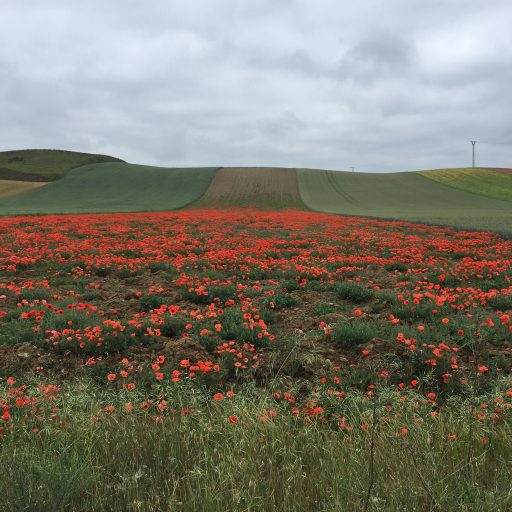
A field of red flowers and a cloudy sky
Camino de Santiago
  • Animal Parlor Games

    When I was in high school in the late seventies, I had a friend I’ll call Jen whose parents were divorced. I’d spend the night at her house from time to time, or visit her after school.

    Her mother, who I’ll call Janice, promoted the idea that she was a sophisticated woman, although even at 17 I could tell her glamor was from a bygone era or from a world apart from the one I inhabited. Janice’s hair was bleached to perdition, and she wore it in a teased, flimsy up-do with gaps I could see through from certain angles. She was extra tan from playing tennis under a flaming Atlanta sun. Jen said, “My mom is so lucky. She gets tan without trying, even through her bra.”

    Janice chain-smoked Virginia Slims. Jen and I would drive aimlessly along winding two-lane roads in Janice’s Cadillac, listening to her eight-track tapes of Neil Diamond and smoking the cigarettes we found in the glove compartment.

    If Janice went out on a Saturday night she could be counted on not to come home until two or three in the morning. It was the era of discos and swingers, and Janice participated enthusiastically. Jen would invite a group of us over to drink beer and maybe fool around. If our beer ran out we’d raid Janice’s liquor cabinet. Jen knew how to make whiskey sours and tequila sunrises, those yummy sweet drinks that don’t taste too strongly of alcohol. Once I puked my guts out in an aluminum garbage can behind the house. Another time I blacked out.

    Janice played a game which involved assigning animal species to people. She said, “Every person has an animal group they belong to. Most people are either birds, dogs, or horses.” And within a certain genus, she would even single out the species.

    Janice labeled her daughter Jen a quail, and truth be told, she was spot on. Jen had a wide, long, face and a smooth, plump body that rode low to the ground, somewhat bottom heavy, but she was also a small person.

    She said I was a robin. I have large, dark eyes, long black hair, a small mouth, pointed chin and nose. After she told me I was a robin, I felt like one, though it’s hard to be objective enough about myself to know if Janice had pinpointed the right species for me.

    Secretly I was glad, and felt sorry for Jen. Quails seemed ponderous, not spry and nimble like the robin. And the quail’s plumage was muted, no red breast to boast of.

    I think Jen was sad about her quail status too. She bought into her mother’s self-styled glamor girl image, really believed Janice was a foxy man-magnet, a superior woman.

    The last I heard about their family, Janice had died of lung cancer, and Jen was in LA, homeless and in debt after losing her job as the head buyer of a large department store chain. Maybe she never got over how her mother placed her in a homely bird group. Who knows, she might have really been a bird of paradise, or a condor.

    November 17, 2008
    memoir, the seventies

  • How I made friends with fear

    How I made friends with fear

    The four of us dress in stiff coats
    to visit our father at his office, travel
    by train to Chicago, the seventeenth floor
    of a skyscraper wedged between
    reachless towers of darkened metal.

    A hushed ride in a mirrored elevator,
    plush carpet, we gather near his desk.
    Before a glass wall
    I stand apart from the other three,
    eleven years old, the eldest
    and by birthright the chieftain of our tribe.

    My sisters watch for signs–how to act?
    But my breath catches at the top
    of my lungs as larger people
    shuffle papers in the outer office–

    I wish I were alone to practice
    at being afraid, to carry out my solo
    rituals in the basement of my house,
    a place that draws me with an unseen cord

    downwards. In the dark I walk
    backwards in a circle, round and round
    three times to conjure up the Devil,
    who I hope will rise from the black
    smudge on my soul to fill up the pitch air.

    I know all about God the Father
    and the Blessed Virgin from weekend
    migrations to Our Lady of the Wayside.

    I want to understand that thorn in God’s side,
    not the thorns in his crown.
    I seek the one who gave Jesus hell in the desert.
    If I am to be an implacable
    ice goddess in this City of Restraint,
    I’ll need to test my courage
    against a hailstorm of fear.

    These thoughts hover on the edge
    of my mind as I look out the thick glass
    to the specks of people below,
    watch toy cars inch along the asphalt,
    wonder what it would feel like to jump, or fly.

    ***

    November 13, 2008
    fear, read write poem

  • Protected: Going Steady in 1972

    This content is password-protected. To view it, please enter the password below.

    narrative poetry

  • postal poetry's september contest

    Here’s a link to another photo by Fernando Sousa, accompanied by my words. I called it, “rolling stones mouth,” after the eponymous magazine. Thanks to Dana and Dave, who, by publishing my postal poems, keep me motivated to do more writing.

    There is an ongoing contest for October, this time featuring photos by Mikey G. Ottawa. Entries are due November 15. Be sure to read the submissions guidelines. One of the requirements is to write while wearing a feather boa.

    November 11, 2008
    dana guthrie martin, dave bonta, Fernando Sousa, postal poetry

  • Louisa Adjoa Parker's Salt-sweat and Tears

    In her classic book, Writing down the Bones (Shambala, 1986), Natalie Goldberg talks about “first thoughts,” those fleeting images, feelings, and ideas that cross one’s mind before the censor of the super ego swoops in and cleans things up for polite society. Those first thoughts form the primordial soup of authentic writing, and are the gold nuggets most gritty writers dive deep to find.

    A poet who has accomplished the deep diving is Louisa Adjoa Parker. Jo Hemmant (poet, editor and author of florescence) recently introduced me to Adjoa Parker’s poems, and from there I ordered her collection, entitled Salt-sweat & Tears, 2007, Cinnamon Press.

    Adjoa Parker gets right to the point in her poems. She doesn’t rely on artifice to lead the reader on a symbolic goose chase, but rather opens her palm and lets us read the lines, without hiding or cowering.

    The themes are not always comfortable – childhood neglect, racism, marginalization, domestic violence, teenage pregnancy, death, abandonment, all held up for the reader in direct, beautiful language.

    Joseph Campbell, in The Hero with a Thousand Faces, speaks of descriptions and paintings of monsters as sublime. We can’t call them beautiful, but they are larger than life, and when we envision them, we are in awe. That’s the effect Adjoa Parker’s poems have on me. She delves into the marrow of life, draws out the painful parts, but does so with poignant metaphors, in just a few lines.

    In fact, it’s the brevity of many of her poems that strikes the reader immediately. Like dreams, good movies, or intriguing novels, Adjoa Parker begins her poems in medias res, by going straight to the bulls eye of the moment.

    Salt-sweat & Tears chronicles a hard childhood and a rocky young adulthood, but the reader is left with hope at the end, as the narrator speaks of self-acceptance, of a connection to the beauty of nature, and the pleasure of simply walking the earth.

    November 10, 2008
    Jo Hemmant, Joseph Campbell, Louisa Adjoa Parker, Natalie Goldberg, Salt-sweat & Tears

  • Some thoughts about Chicago

    When I was in Chicago last month for my brother-in-law’s wedding celebration, we walked up Magnificent Mile, crossed over the Chicago River, and headed to Millennium Park. Of course it was windy – Chicago is known as the Windy City, and this day lived up to the reputation.

    The following photo is the skyline reflected in a sculpture by Anish Kapoor, entitled Cloud Gate. My friends in Chicago tell me everyone calls it the bean.

    Taken with my cell phone, this photo is of the underbelly of Cloud Gate. The little specs are the reflections of all the people walking underneath. Looking at the photo, I’m reminded of a microcosm, with the tiny people being enveloped by a mother ship or a cosmic space mama.

    I hadn’t been to Chicago in decades, not since I was a young girl, when I lived in Arlington Heights, a town about thirty minutes outside the city by train, on the north side. For those of you who aren’t familiar with Chicago, Barack Obama’s home is in Hyde Park, a neighborhood inside the city, to the south.

    It’s interesting to note that Barack Obama fell in love with a woman whose family had deep roots in the south side of Chicago. In a PBS documentary, Barack says that he admired the sense of belonging he discovered through his wife Michelle’s family; he realized through his relationship with her that belonging to a place was an aspect of his life he lacked, and needed to develop.

    Sometimes I ask myself how someone finds the courage, or the confidence to embark on a path such as becoming the president of the United States. I wouldn’t want that job, especially not now, although Barack seems born for it. But that’s a reduction of the facts, to say he was born with the ability, the desire, the self-assurance and the courage to take up the challenge of running the United States.

    Obviously he’s gifted with intelligence, but the judgment, wisdom, and confidence had to be either learned or instilled in him. He gives a lot of credit to his grandmother, and to his wife Michelle, but I wonder, after my recent visit to Chicago, if living in such a powerful, thunderously strong city as Chicago might have also contributed to his drive to reach the White House.

    Snapshot of the Wrigley Building, on Miracle Mile in Chicago

    Illinois poet Carl Sandburg,(1878-1967), wrote a poem called Chicago, which many American children used read in school. It exudes the wild male energy of the city.

    Hog Butcher for the World,
    Tool maker, Stacker of Wheat,
    Player with Railroads and the Nation’s Freight Handler;
    Stormy, husky, brawling,
    City of the Big Shoulders:

    Frank Marshall Davis (1905-1987), wrote Chicago’s Congo, in which he paints the city as a larger than life woman.

    Chicago is an overgrown woman
    wearing her skyscrapers
    like a necklace …

    And in 1967 Marge Piercy published Visiting a dead man on a summer day, in which the narrator speaks to Louis Sullivan, one of the most celebrated architects of the first skyscrapers of Chicago, while sitting on his grave. In the second stanza the narrator says,

    The waste of a good man
    bleeds the future that’s come
    in Chicago, in flat America,
    where the poor still bleed from the teeth,

    We are all influenced by our environments, and in Barack Obama’s case, I would wager the power of the city, combined with the poverty of many of the people, spurred him on to use his intelligence and wisdom to, dare I say it, save the world.

    November 8, 2008
    Anish Kapoor, Barack Obama, Carl Sandburg, Chicago, Cloud Gate, Frank Marshall Davis, Marge Piercy

  • read, write, collaborate

    In Your Eyes My Own Reflection

    When you step out from behind
    a gossamer curtain, the shape
    of your face, the line of your lips,
    releases the light, curves into morning.

    Pieces of me stick to whoever
    gets too close, they tie you down,
    rough as rope.

    As you peel me away
    I feel a shiver, notice a reflection
    in a mirror – is it you, or is it me?

    ***

    The lines from this poem come from several different poets. To read the original lines, visit read write poem’s collaborative poetry prompt, by Read Write Poem participant Holly, from Lost Kite.

    November 6, 2008
    read write poem

  • just when you think it's over, a collaborative pantoum

    just when you think it’s over (click to listen)

    The philter will bind you a year and a day,
    your body and mind beaded on a thread of time,
    and when at last it’s done with you,
    holding the strength of your sinews,

    your body and mind beaded on a thread of time,
    what will you have but fire on your mind?
    Holding the strength of your sinews,
    the philter will find you, I swear, some way.

    What will you have but fire on your mind?
    Arms & eyelids strung, you’re a marionette.
    The philter will find you, burn your mind, some way
    as you dance on the street for the crowd.

    Arms and eyelids strung, you’re a marionette,
    a tattered Pierrot at a mute carnivale.
    As you dance on the street for the crowds,
    your muscles bundle into nerve bouquets.

    A tattered Pierrot at a mute carnivale,
    void of a beloved, you will need my help.
    As you dance on the street for the crowds,
    you climb inside my cauldron, feast from burning hands.

    Void of a beloved, you will need my help
    opening surfaces, unsheathing layers.
    You climb inside my cauldron, feast from burning hands
    that run along your rough fibrillations.

    Opening surfaces, it unsheathes your layers,
    and when at last it’s done with you,
    running along your rough fibrillations,
    the philter will bind you a year and a day.

    ***

    I arranged the lines for this pantoum from quatrains by the following poets, including one line I wrote.

    rethabile
    nathan
    michelle
    jillypoet
    dana

    To read the original quatrains, please visit poems in progress: quatrain chain at the poetry collaborative.

    The first and last line of this pantoum comes from a collaborative poem by Jo Hemmant and Michelle McGrane, entitled Each act of love foreshadows the end.

    November 5, 2008

  • Barack Obama is our next president!

    Giddiness, gratitude, tears of joy, awe.

    November 4, 2008

  • postal poetry

    Postal poetry has published a photo by Fernando Sousa entitled, “Aerosol Man,” accompanied by a short poem I wrote. Rethabile also wrote to this photo as part of postal poetry’s October contest.

    Here’s a postcard poem I made the other day. It was a little too silly to send to postal poetry, but I’m going to post it here because I think we could all use some levity, in light of the global economy, war, vitriolic elections in the US, well, the list goes on.

    The postcard is from a beach I visit every year with my family. The stickers are from the Pirates of the Caribbean series by Hallmark. If you like to talk like a pirate, and who doesn’t, go to the Original Talk Like a Pirate website. They have a translator link, and you can even send pirate-talk emails.

    November 4, 2008
    pirates, postal poetry

Previous Page Next Page

Blog at WordPress.com.


Loading Comments...
 

    • Subscribe Subscribed
      • Balanced On the Edge
      • Join 241 other subscribers
      • Already have a WordPress.com account? Log in now.
      • Balanced On the Edge
      • Subscribe Subscribed
      • Sign up
      • Log in
      • Report this content
      • View site in Reader
      • Manage subscriptions
      • Collapse this bar